
Five Crime-Themed Slots with a GTA-Style Atmosphere
From Miami crews to vault raids and police chases, these five slots borrow familiar crime-story ingredients. Here is where the GTA resemblance starts and stops.
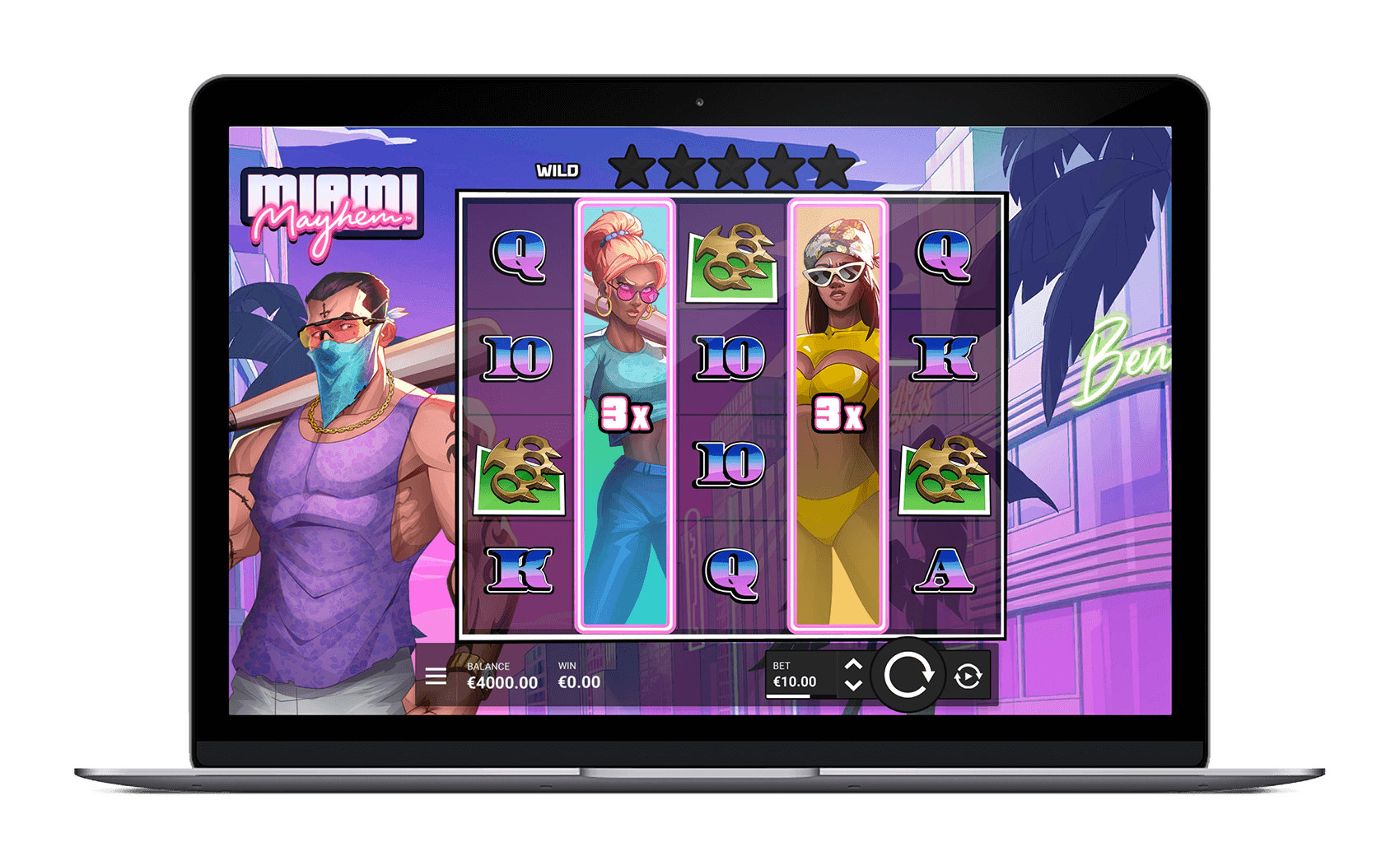
A crew with a questionable plan. A vault that is supposed to be impossible to crack. A getaway that attracts rather more police attention than anyone expected. GTA fans know the ingredients, even when the story moves somewhere other than Los Santos.
Those same ideas turn up in casino game design. Some slots lean into bright Miami scenery; others build their whole presentation around an escalating chase or a robbery. The interesting part is how each one translates that theme into something happening on the reels.
We have picked five examples for their setting and mechanics, rather than their advertised jackpot. This is an editorial comparison for adults aged 18+, not a ranking of where to gamble. These are separate casino games, not GTA expansions or games we are presenting as licensed Rockstar products. Similar artwork does not mean similar gameplay: a slot does not reward your driving, aiming or planning skills.
The five games at a glance
| Game | Developer | The crime-story connection | Feature worth understanding |
|---|---|---|---|
| Miami Mayhem | Hacksaw Gaming | A crew, missions and a rising Wanted Level | Crew symbols can expand into wild reels |
| Cash Crew | Hacksaw Gaming | A team breaking into a guarded vault | Cash collection and multiplier positions |
| Apex Dregs | EXCO | An escalating police-chase idea | A doubling multiplier with bonus checkpoints |
| Money Train | Relax Gaming | An outlaw gang and a train robbery | A Western setting across a five-reel game |
| San Quentin xWays | Nolimit City | The prison end of a crime story | Symbols that expand the available ways to win |
The first three have the clearest connection to modern crime-game themes. Money Train is a Western detour; San Quentin is a much darker change of scene. That distinction matters more here than a list of huge maximum-win figures.
1. Miami Mayhem: the crew and the wanted level
Miami Mayhem is the most obvious starting point for this comparison. Its crew-and-missions framing gives the action a familiar vocabulary, rather than relying on a city name alone.
According to Hacksaw’s game description, a winning Crew symbol can expand into a wild reel. Wanted symbols start missions with three respins and a target symbol. Completing a mission raises the Wanted Level, changing the minimum multipliers available on expanded Crew reels. Its three bonus rounds are called The Hit, We Split and Get Lit.
For a GTA reader, that is the useful comparison: an action creates escalation, and the interface makes the escalation visible. The important difference is control. A GTA chase gives you streets, cover and decisions; these slot missions resolve through the game’s symbol outcomes. Learning the names helps you follow the screen. It does not turn the chase into a skill challenge.
2. Cash Crew: the vault job
Cash Crew takes a narrower idea and sticks with it: assembling a team for a robbery. If your favourite part of a crime story is the job itself, rather than cruising around the city, this is the closer thematic match.
The developer’s rules describe a five-by-five layout. Cash symbols need a Grab ’em symbol to collect them, while multiplier symbols can affect nearby collected cash. The Vault and High-Security Vault bonus rounds also keep activated multiplier positions in play for the duration of the feature.
That gives the robbery theme a clear visual purpose: the screen shows money, collection and positions that stay active. Our comparison with a heist is about that presentation, not about planning a profitable job. You are not choosing a hacker, splitting a take with friends or finding a better escape route. It is a casino round dressed around a vault raid.
3. Apex Dregs: escalation becomes the mechanic
Apex Dregs is interesting because its crime theme is tied to a specific design idea. In an interview with Fruity Slots, EXCO’s Aleksandrina Dimitrova explained that the team connected a climbing multiplier with the feeling of an increasing wanted level. That became the chase concept.
EXCO’s own mechanics guide explains the Doubling Dial: winning cascades add wilds and double the multiplier. In the base game, a non-winning spin resets the dial. During free spins, specified checkpoints provide floors below which the multiplier does not fall.
The checkpoints make this a useful game-design example. They give the sequence a sense of stages, rather than presenting every result as an isolated event. But a checkpoint on a multiplier is not a protected bank balance, and it does not mean a session will end ahead. The borrowed feeling is pursuit and escalation; the underlying activity is still a game of chance.
4. Money Train: the Western detour
Money Train belongs in the broader outlaw conversation, although it is a less direct GTA comparison. Its setting is the Wild West, not contemporary Miami. Think of it as the point where this list takes a turn towards a different kind of crime fiction.
Relax Gaming’s original Money Train page describes a five-reel, four-row game with 40 fixed paylines and a gang built around a leader, a debt collector, a TNT expert and a gunslinger.
That line-up gives us the connection: a group of specialists gathered around a train robbery. We would not call it a GTA VI lookalike, and this entry refers to the original Money Train rather than treating every sequel as the same game. If the appeal of the comparison is the modern city, Miami Mayhem is the more relevant example. If it is the structure of an outlaw story, the train setting earns its place.
5. San Quentin xWays: after the getaway goes wrong
San Quentin moves the setting behind prison walls. It is the harshest tonal shift in this selection, with none of the holiday-postcard associations of Miami. The connection to GTA is broad crime fiction, rather than a particular city or character.
On its official San Quentin page, Nolimit City explains the xWays system: qualifying symbols reveal stacks of matching symbols, increasing the ways available to win. That changes the shape of the reel display instead of simply putting a prison background behind an otherwise static grid.
It is worth keeping the name precise. This entry is about San Quentin xWays, not a later game with San Quentin in its title. Their rules should not be mixed together. For our purposes, the original illustrates how a developer can build a very different mood from the same broad criminal-world theme. It will not suit a reader looking for a lighter city-and-getaway atmosphere.
What makes a useful comparison with GTA?
A palm tree and a sports car are not much of an argument on their own. The better comparison asks what the theme actually does inside the game.
Miami Mayhem names and displays an escalating pursuit. Cash Crew builds its feature language around collecting the contents of a vault. Apex Dregs turns rising pressure into a visible multiplier sequence. Those are more specific observations than calling every crime-themed game “GTA-inspired”. Unless a developer says so, we should not present resemblance as evidence of direct inspiration.
There is also a limit to the comparison. GTA lets you explore, improvise and become better at a task. Slot presentation can borrow missions, progress bars and characters without borrowing that relationship between practice and success. The surface may feel familiar while the decision-making is completely different.
That is why this selection is organised by theme. It is not a claim that one of these games is a sensible way to make money, or that experience with GTA gives anyone an advantage at the reels.
Which setting actually appeals to you?
It helps to be specific about what you enjoy in a crime game. Someone who likes wandering around a sunlit city probably wants a different atmosphere from someone who skips straight to the robbery missions. Putting both interests under a single “GTA-style” label hides that difference.
For the city-and-crew side of the comparison, Miami Mayhem is the strongest fit in this selection. Cash Crew has a tighter focus: everything revolves around the vault job. Apex Dregs is more about the chase building momentum. Those three cover different parts of a familiar crime story, even though none offers the freedom to move between them as you would in an open world.
Money Train and San Quentin sit further away from that city setting. One swaps roads for a Western railway robbery; the other takes the story into prison. They make sense as examples of crime-themed design, but including them should not stretch the comparison beyond recognition. If you came here for neon streets and a modern crew, those are not the closest matches.
There is no overall winner here. The useful question is which part of the theme interests you enough to read about its design. That can be answered from screenshots and the developer’s description without placing a bet.
Read the rules behind the movie-like names
“Mission”, “crew” and “checkpoint” are inviting words, particularly if you already spend time in games built around them. Before attaching a familiar meaning to one, look at what the slot’s rules actually say it does.
Take Cash Crew. A screen full of cash symbols sounds like a completed robbery, but its collection rule is the detail that matters: those symbols need the relevant collector. The artwork tells one part of the story; the rules explain how the result is calculated. In Miami Mayhem, the mission language describes a respin sequence and a target symbol. It is not asking you to carry out a task with a controller.
Apex Dregs provides another useful example. A multiplier checkpoint sounds reassuring, but the protection applies to a specified feature value. It does not protect the money used to start playing. Reading that distinction once is more useful than memorising a dramatic bonus-round name.
When looking through a game’s information panel, start with three questions: what triggers the feature, what carries over during it, and what resets when it ends? If a screenshot does not answer those questions, it is doing its job as promotional artwork rather than serving as a rules sheet. Go back to the developer’s explanation for the missing detail.
Questions GTA readers might have
Are these games part of GTA Online?
No. This article covers separate titles from the developers named in the table. It is not a guide to the games inside GTA Online’s Diamond Casino, and none of these entries should be read as an announcement of Rockstar content. The comparison is about crime-story themes and how they appear on screen.
Do I need to gamble to appreciate the comparison?
No. Official screenshots, descriptions and feature explanations are enough to explore the artwork and the design ideas discussed here. We have linked those sources beside the relevant games. Our observations are based on that material; this article is not a report of personal real-money play sessions.
Does the casino listing above tell me where these five games are available?
No. The advertising listing and the editorial selection serve different purposes. An operator appearing above does not establish that it carries Miami Mayhem, Cash Crew or any other title in this article. Nor does the presence of an offer verify that a particular reader is eligible for it. Do not use the table as an availability directory for these games.
A few points for UK readers
An international developer page is a source for a game’s design, not confirmation that every operator in Great Britain offers that game or the same configuration. Features and versions need checking in the actual rules. We have not verified UK availability for every title in this selection, so this article does not provide a list of casinos where you can play them.
RTP figures also need context. The Gambling Commission explains that return to player is an average over a substantial number of plays, not a promise about an individual session. A percentage does not tell you how much of your own deposit you will get back.
Our UK online casino guide covers the broader basics. If you are reading an offer alongside a game, the bonus and wagering explainer separates the promotion’s conditions from the slot itself. Account checks and payments are covered in our withdrawal and verification guide.
For the closest thematic comparison, start by reading about Miami Mayhem, Cash Crew and Apex Dregs. The other two show how widely the same crime-story ingredients can travel. None needs to be described as “the GTA slot” to be an interesting example of game design.
18+ editorial content. GTA Intel is not affiliated with Rockstar Games, Take-Two Interactive or the slot developers featured here. The advertising listing above contains affiliate links and is separate from this editorial selection. Gambling involves the risk of losing money.