Big Smoke's Betrayal: The San Andreas Story Arc, Decoded Mission by Mission
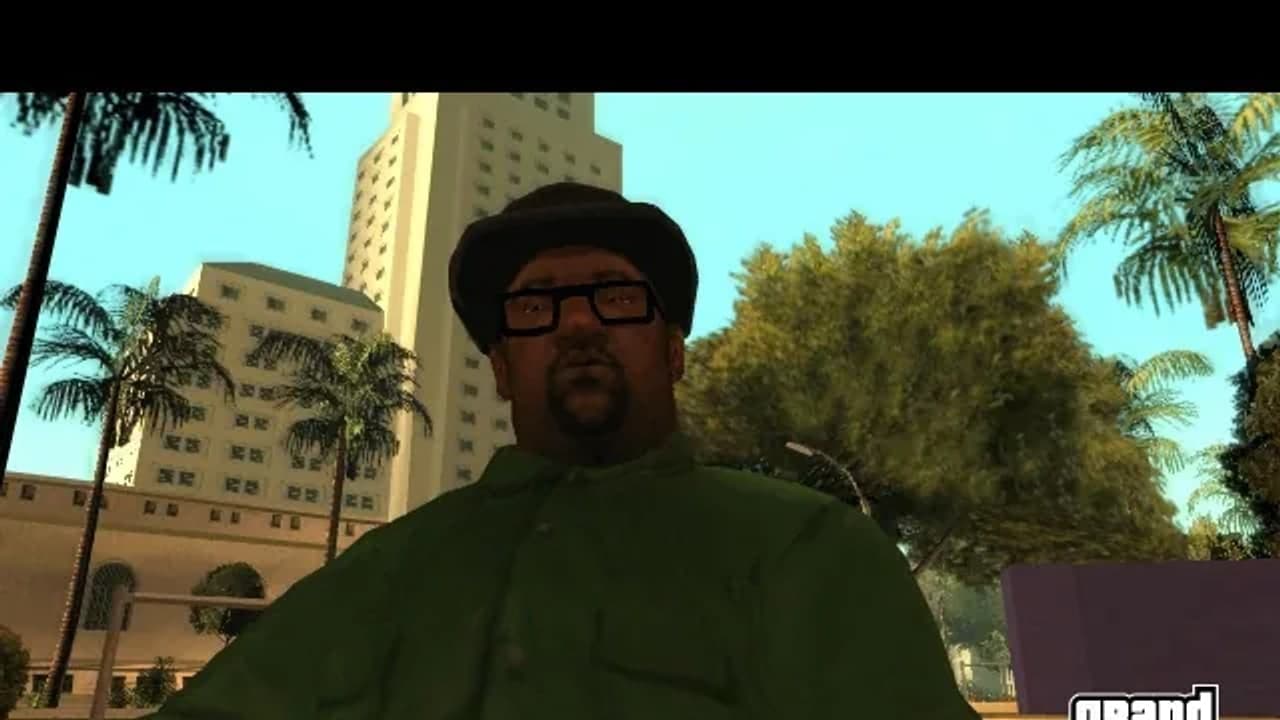
Melvin 'Big Smoke' Harris is one of the most infamous traitors in video game history. The signs were there from the first hour. Here's every clue Rockstar planted before The Green Sabre, who he was actually working with, and what his final monologue really says.
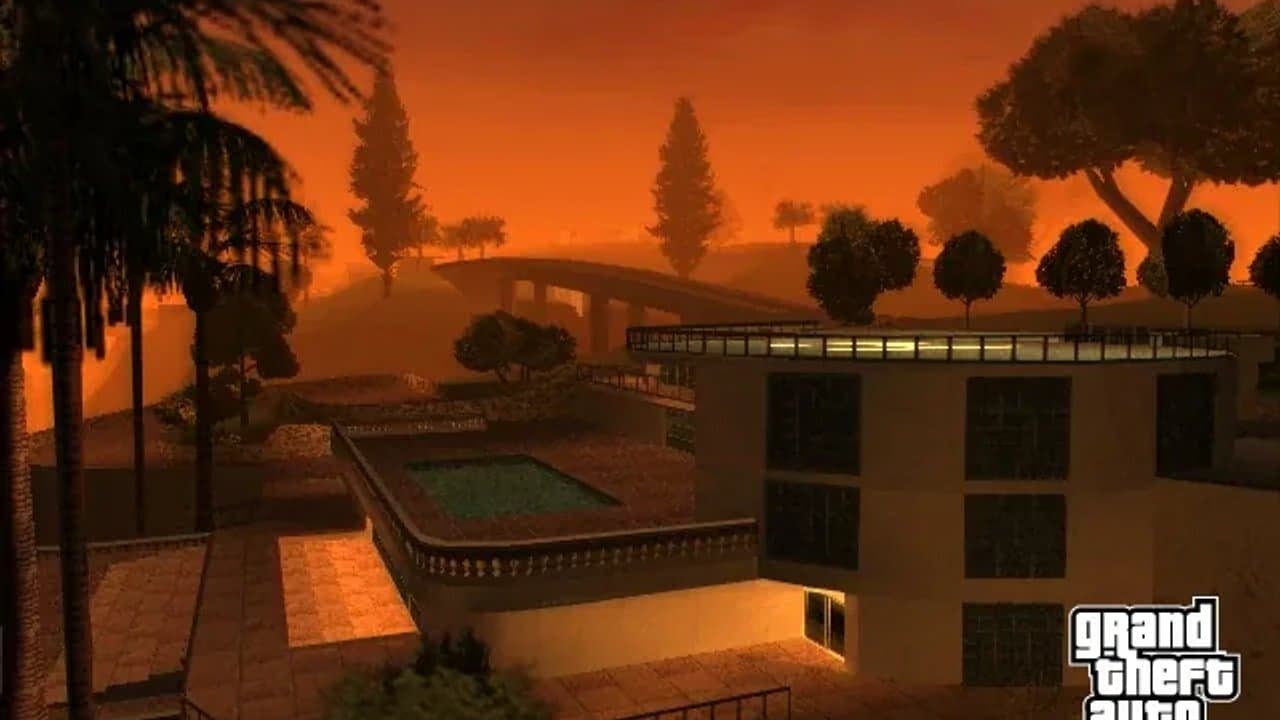
Melvin Harris, better known as Big Smoke, is one of the most notorious turncoats in the history of video game storytelling. By the end of Grand Theft Auto: San Andreas, he is dealing crack at industrial scale out of a fortified palace in East Los Santos, working for corrupt cops and rival gangs, and personally responsible for the death of CJ's mother. The full betrayal lands in a single mission, The Green Sabre, but Rockstar planted the breadcrumbs for it across roughly twenty hours of preceding play. Here is the arc in order, and what every clue actually said.
Who Big Smoke is
- Full name. Melvin "Big Smoke" Harris.
- Voice actor. Clifton Powell. An American character actor whose other credits include Ray, Friday, and Norbit. Powell's performance is the spine of the character: the laugh that lands wrong, the cadence that sounds too pleased.
- Position. A senior lieutenant in the Grove Street Families, the Johnson-family-aligned gang that the protagonist Carl "CJ" Johnson is reluctantly drawn back into when he returns to Los Santos in 1992.
- Allies on paper. Sweet Johnson (the GSF leader), Ryder, CJ, Kendl, and the wider Grove Street block.
- Allies in reality. Officer Frank Tenpenny of the LSPD's corrupt C.R.A.S.H. unit, the rival Ballas, the Loco Syndicate (Mike Toreno, T-Bone Mendez and Jizzy B., with the San Fierro Rifa as their on-the-ground enforcers), the Russian mafia tied to the Syndicate through Mendez, and, post-betrayal, the Vagos.
The entire arc of GSF's decline in the first act of San Andreas is, on a second playthrough, visibly engineered by Big Smoke.
The clues, in mission order
Robbing Uncle Sam (Los Santos arc, early)
The first hard tell. Smoke insists on stealing military hardware from a National Guard depot. The mission feels like just another GSF action set-piece, but the cargo is heavy automatic weapons, not the small-bore street guns a neighbourhood gang needs. Watch on a replay: Smoke's framing of "we need to step up" is the first time he's pushing the gang toward something larger than itself. He has a buyer for those weapons. Sweet doesn't know about it. Neither does CJ.
OG Loc and the music industry detour
The mid-Los-Santos missions for OG Loc are, narratively, a distraction. They take CJ away from the day-to-day of GSF business. Smoke encourages CJ's involvement, gently. The effect is to weaken the GSF's collective situational awareness in Los Santos while Smoke and Ryder make their own arrangements with the Ballas. Not a smoking gun by itself. A pattern with hindsight.
The Ballas territory pushback
In the early-game Drive-Thru mission, Smoke and Ryder coordinate a drive-by on the Ballas. It's framed as standard gang warfare. The truer reading on a replay: Smoke's tactical choices in these early-Ballas missions consistently keep CJ involved in low-level skirmishes while the larger relationships are quietly built behind the scenes.
Sweet's growing isolation
Across the first-act missions, Sweet repeatedly notes that GSF is losing territory, that money's getting tight, that something feels off. Sweet is the brother who never left. He sees the pattern. Smoke and Ryder always have a reason why each individual loss is unrelated to the last one. The accumulating effect is to push Sweet toward the moment in The Green Sabre where he agrees to a meeting his lieutenants have set up.
The Green Sabre
This is the betrayal mission. Sweet receives word that Ballas are gathered at a location off the freeway. He brings CJ along. The Ballas were tipped off by Smoke and Ryder. Sweet is ambushed, badly wounded, arrested. CJ is pulled out of the firefight by Officer Tenpenny, who dumps him in Whetstone county, off the GSF map, with nothing.
The other half of the GSF collapse predates the mission. Beverly Johnson, CJ's mother, was killed by a Ballas drive-by before the game begins. The drive-by, intended for Sweet, hit Beverly instead and is the reason CJ flies home from Liberty City in the opening cutscene. Rockstar shows the killing in The Introduction DVD that shipped with the game's collector's edition. In-game, it's already history when Carl steps off the plane. The Green Sabre delivers the second half of the family's destruction: Sweet arrested, the gang broken, CJ exiled.
That's the breakpoint. Everything after The Green Sabre is CJ trying to rebuild the family that Big Smoke's betrayal destroyed.
The Loco Syndicate and the Russian connection
Smoke isn't working alone, and he isn't simply working for the Ballas. The map of who's actually backing him expands across San Andreas' second and third acts.
- Tenpenny is the corrupt CRASH officer pulling strings across the entire game. He uses Smoke and Ryder as Grove Street insiders, and he uses CJ later as a CRASH cleanup operative.
- The Ballas receive territory, weapons and Grove Street block control as their payoff for the ambush.
- The Loco Syndicate is the larger cocaine distribution network supplying Smoke's product. Its core is Mike Toreno, T-Bone Mendez, and Jizzy B., with the San Fierro Rifa as enforcers. The Vagos aren't formally Syndicate members; they fold into Smoke's retail operation in Los Santos after the betrayal.
- The Russian mafia, tied to the Syndicate through Mendez, supplies cocaine wholesale.
By the time CJ has unraveled the Syndicate in San Fierro (the Mike Toreno and Wu Zi Mu missions), the picture is clear: Smoke's crack palace in East Los Santos is the retail end of a multi-state operation that the corrupt LSPD has protected from above and the multi-gang Loco Syndicate has supplied from across the map.
End of the Line
CJ's final confrontation with Smoke happens in the closing End of the Line mission, at Smoke's fortified crack palace. CJ fights through several floors of armed dealers, reaches Smoke at the top, and the cutscene plays out.
Smoke is dying. The line everyone misremembers is "I had power, money, bitches, cars." That's not what the script says. Smoke's actual dying monologue is closer to:
"I got caught up in the money, the power… I had no choice. I had to do it. I just saw the opportunity. When I'm gone, everyone gonna remember my name. Big Smoke!"
It's a more interesting line than the misquote. Smoke isn't bragging about wealth. He's explaining, weakly, that he saw a structural opportunity inside Grove Street's decline and took it, and the part he's clinging to is the name. Not the money. The name.
Tenpenny escapes the palace in a fire truck. The final mission chases Tenpenny across Los Santos as the Grove Street block riots. End of the Line closes with CJ, Sweet and the GSF retaking their neighbourhood.
The "follow the damn train, CJ" question
Yes, the line is real. It is genuinely in the game.
The line is spoken by Big Smoke, by Clifton Powell, on the mission failure screen of Wrong Side of the Tracks, where Smoke and CJ try to pursue Ballas members aboard a moving freight train. If you fail the mission (which most players did, repeatedly), Smoke's exasperated "All we had to do was follow the damn train, CJ!" plays out. It's a mission-failure line, not a cutscene, which is why some players who completed the mission first try never heard it.
The line became a global meme well before "GTA memes" was a category. Twenty-one years later it's still arguably the most-referenced single piece of dialogue from any 3D-era GTA. The cultural footprint is bigger than the mission itself.
For a deeper look at the meme that came from Smoke's other order, see our Big Smoke's order, decoded. For the wider GSF arc, the Johnson family piece covers Sweet, Kendl and Beverly. The Cesar Vialpando arc covers the GSF's reconstruction through the Aztecas alliance.
Why Smoke's betrayal still hits
Twenty-plus years after San Andreas' October 2004 launch, Big Smoke remains one of the most-discussed betrayals in any video game. Three reasons it lands harder than most:
- The clues are planted from the first hour. Robbing Uncle Sam is a tell. Drive-Thru is a tell. The pacing of GSF's territory loss is a tell. Rockstar didn't withhold the information. The player just trusted Smoke too much to notice.
- The personal cost is real. Beverly Johnson's death is what brings CJ home in the first place; Sweet is arrested in The Green Sabre; the gang block is lost. CJ loses every reason he came back to Los Santos in the same act.
- The character's writing. Smoke is, at every appearance, charming. Powell's performance leans into the warmth. The first time you replay the early Los Santos missions, the warmth reads as a mask. The second time, it reads as the actor doing exactly what the script asks.
Big Smoke is the template for every later "trusted ally who was always the antagonist" in Rockstar's writing. The pattern shows up in different forms across GTA IV, V, and Red Dead Redemption 2. None of those later betrayals lands quite as cleanly as Smoke's, partly because no later Rockstar game has matched San Andreas' twenty-hour first act for sheer time spent making the player believe in the friendship.
Sources
- Big Smoke on the GTA Wiki. Character overview, allies, in-game role.
- The Green Sabre on the GTA Wiki. The betrayal mission and its setup.
- End of the Line on the GTA Wiki. The final mission and Smoke's death.
- End of the Line script transcript on Grand Theft Wiki. Smoke's actual dying monologue.
- Wrong Side of the Tracks on the GTA Wiki. The mission that produced the "follow the damn train" meme.
- Clifton Powell on Wikipedia. Voice actor's credits and career.
- Know Your Meme: Follow the Damn Train, CJ. Meme origin and cultural footprint.
- Rockstar Games: GTA San Andreas official site. Publisher's authoritative source on characters and missions.