Niko Bellic: The Most Complex Protagonist in GTA History
Eighteen years after Grand Theft Auto IV's April 2008 launch, Niko Bellic still reads as the most layered protagonist Rockstar has ever written. A Yugoslav war veteran chasing a cousin's lie about the American dream. Here's everything the game actually tells you about him, and what the dialogue gets right that most players miss.
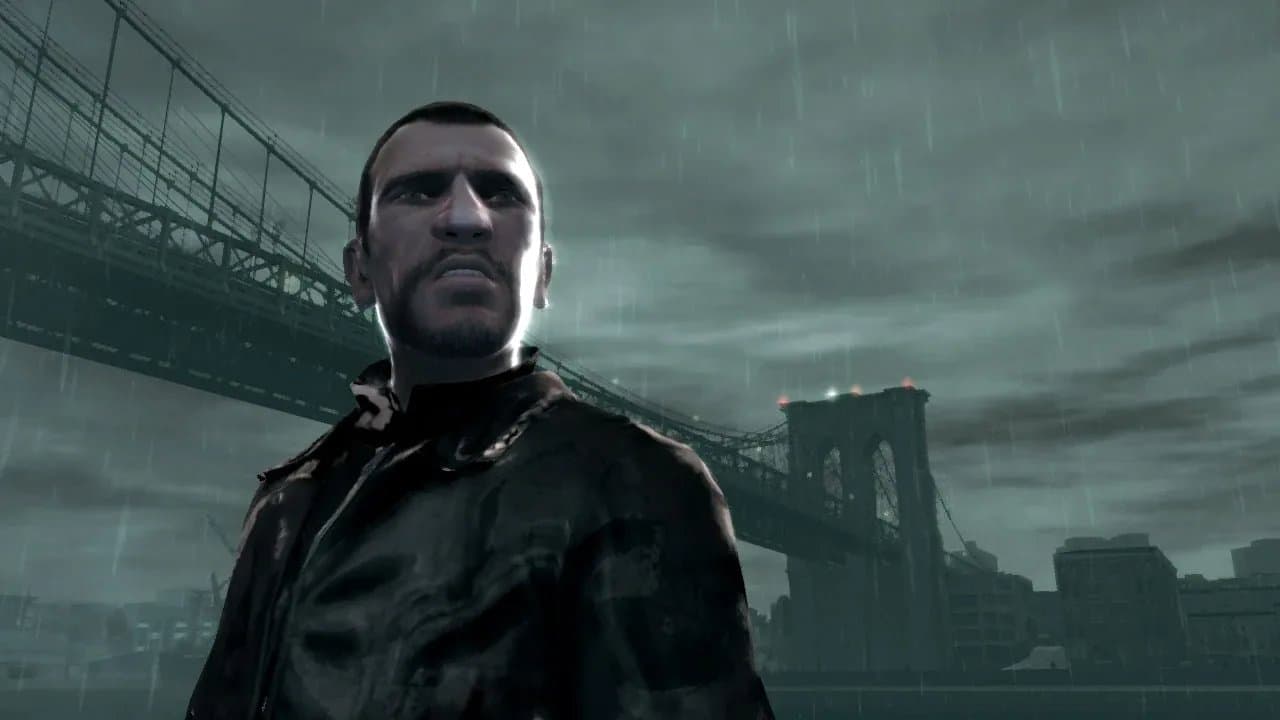
Niko Bellic landed in Liberty City on a slow boat in 2008, chasing a cousin's letters promising women, money and freedom. The cousin had been lying. The reality is a dingy apartment in Hove Beach, a struggling taxi company, and within a week, dead bodies. Eighteen years later, Niko remains the most psychologically complete protagonist Rockstar has put on screen. He's also one of the most frequently misread. Here's what Grand Theft Auto IV actually tells you about him, and what most playthroughs miss.
Where he comes from
Rockstar deliberately keeps Niko's nationality vague. He is from somewhere in the former Yugoslavia. Dialogue places him as a teenage soldier in the Yugoslav Wars of the early-to-mid 1990s, and the game never specifies "Serbian" or "Bosnian" beyond regional context. The vagueness is a creative choice, not an oversight. It lets Niko stand in for any of the millions of young Eastern European men whose lives were defined by that decade.
The defining trauma is the ambush. Niko tells Roman the story directly, early in the game, after killing Vladimir Glebov:
"There were fifteen of us. All boys from the village. But one of us betrayed the group… Twelve people died, three escaped."
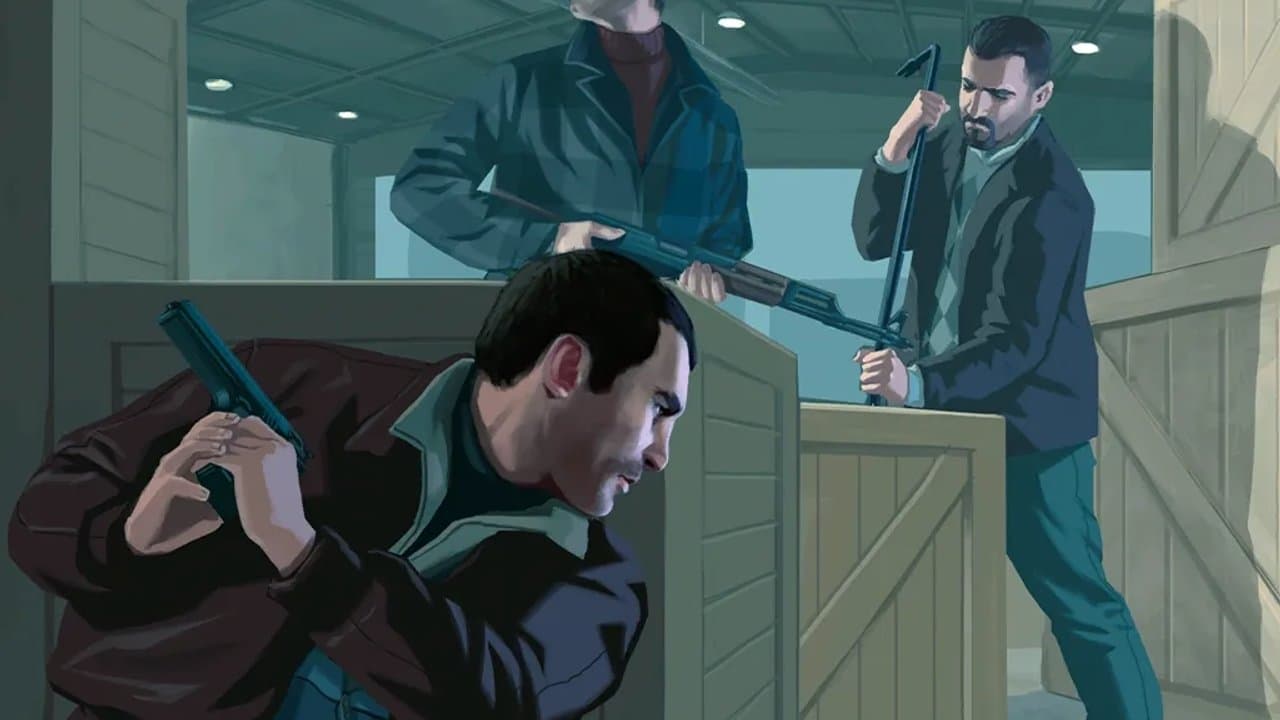
That fifteen-man squad is the central wound. Niko, Florian Cravic (later living in Liberty City as Bernie Crane), and Darko Brevic were the three survivors. One of them sold the unit's position for cash. Most of GTA IV's main arc is, structurally, about Niko trying to find out which.
Why he comes to Liberty City
The plain text of Niko's arrival is that he is chasing Roman Bellic's emails. Roman is Niko's cousin, not his brother, who moved to Liberty City around 1998 and built up an exaggerated success story. The mansion in the letters is a roach-infested one-room apartment over a taxi dispatch. The fleet of expensive cars is a single battered Esperanto.
The subtext is harder. Niko is also chasing the traitor. He suspects Florian, who has emigrated to Liberty City, may be the one who sold his unit. The "American dream" framing is the cover story. The investigation into Darko and Florian is the real reason he's there.
That double motive is the engine of the entire game. Every time Niko refuses to leave a job, every time he tells someone "I have business here," he is not talking about Roman.
Who he works for
GTA IV's plot moves Niko through Liberty City's underworld in roughly four stages.
- Russian mob (Broker/Hove Beach). Niko falls in with Mikhail Faustin, an unhinged Russian gangster in Hove Beach, and his partner Dimitri Rascalov. Faustin orders Niko to kill Dimitri's friend Vlad; Dimitri later orchestrates Faustin's death and then turns on Niko himself. Dimitri becomes the game's primary antagonist.
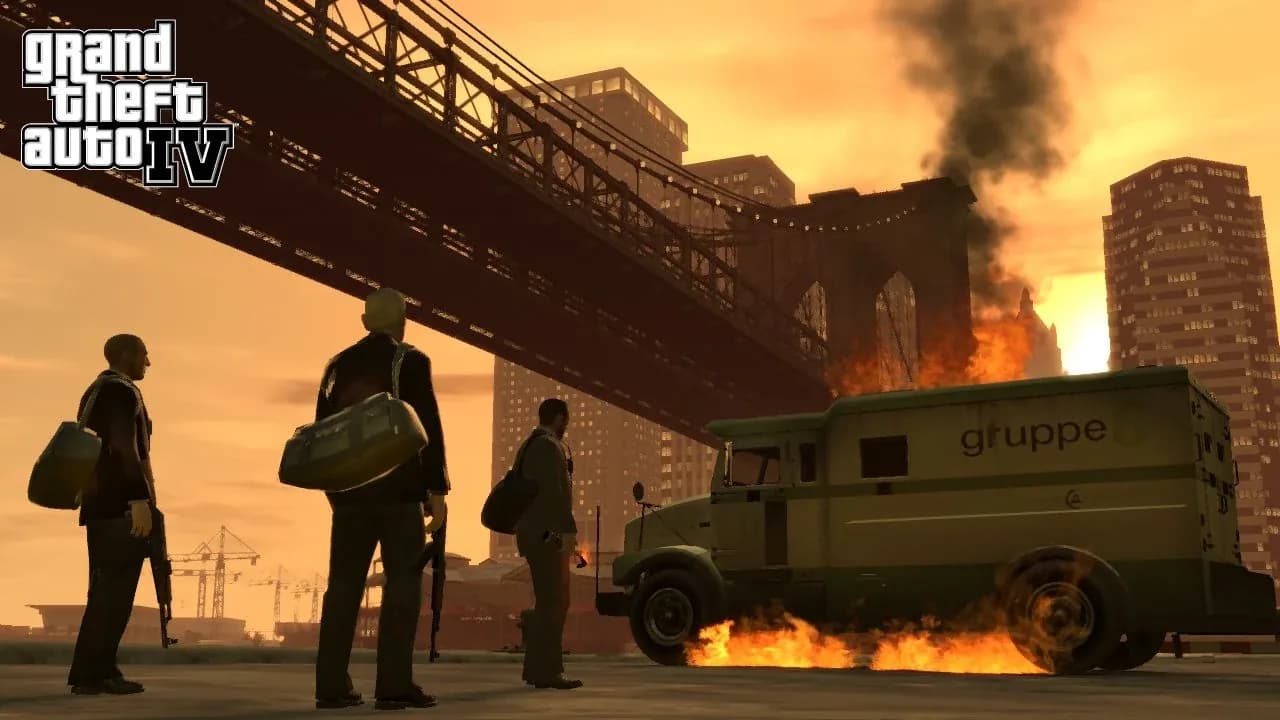
- McReary Irish mob (Algonquin). Niko meets Patrick "Packie" McReary, eventually working with the wider McReary family on a string of jobs that culminate in the Three Leaf Clover bank heist. He also dates Kate McReary, Packie's sister, and the relationship is one of the few things in the game that isn't transactional.
- Diamond shipment (mid-game). A Liberty City heroin-and-diamonds caper pulls in characters across all three of Rockstar's GTA IV-era games. Niko's role in the diamond deal at the Libertonian is referenced in both The Lost and Damned (Johnny Klebitz) and The Ballad of Gay Tony (Luis Lopez).
- Pegorino Family (Alderney). Eventually Niko ends up working for Jimmy Pegorino, the desperate boss of a fading Italian-American crime family. Pegorino is the route to the game's final choice.
Cutting through all of this is the "United Liberty Paper" contact, a CIA-coded fixer who feeds Niko intelligence on Darko in exchange for cooperation. That thread is what eventually delivers Darko to Niko in the late-game mission That Special Someone. Niko's choice in that scene, kill or spare, is the only moment in the game that directly resolves the war backstory.
The voice behind him
Niko Bellic was performed by Michael Hollick, an American actor who provided both the voice and motion capture across roughly fifteen months of production from 2006 to 2007. Hollick was reportedly paid about $100,000 for the role. After GTA IV opened to over $500 million in its first week, Hollick became one of the more visible voices criticising the video-game industry's lack of residual structures, telling The New York Times in 2008 that he was grateful for the opportunity but frustrated that voice actors don't share in the runaway success of games they anchor. He directed most of that frustration at union contracts, not at Rockstar.
The performance is what makes the writing land. Niko's dialogue is full of clauses that, on the page, could feel theatrical. The flat, accented, slightly tired delivery is what carries them.
What makes him different from every other GTA protagonist
The pattern across mainline GTA is that the protagonist enters a city as an outsider, gains power, and either consolidates it (Tommy Vercetti, CJ) or watches it collapse (Michael De Santa). Niko inverts the structure.
- He doesn't want power. Niko refuses to enjoy any of what he earns. The mansion-equivalent in Alderney is a perfunctory house he barely lives in. The cars are functional. He never builds an empire.
- He has already been a killer for a decade. Niko isn't a working-class kid who becomes a criminal across the course of the game. He is a war veteran who has been killing for fifteen years before he gets off the boat. The arc isn't about becoming dangerous, it's about whether he can stop.
- The American dream is the joke. Every time Roman talks about hot tubs and women, Niko replies with the war. The cousin's relentless optimism is the game's funniest material precisely because it lands on a character who has seen the worst.
- The big moral choice isn't a heist, it's a person. In That Special Someone, the player gets Darko at gunpoint, weak and high, and decides whether killing him changes anything. Both options are written as wrong. There is no good answer.
That structural choice, building the moral spine of the game around a war crime resolution rather than a heist or a betrayal, is unique to GTA IV. No other game in the series has tried it.
The two endings, briefly
GTA IV ends with Niko making a single decision: take the heroin deal Jimmy Pegorino is offering, or refuse it. The two branches lead to two completely different finales, and one of the people closest to Niko dies in each. We've explained both paths and which one most players consider canon in a companion piece on GTA IV's two endings.
What stays constant is Niko's reaction. Both endings end with him standing on a Liberty City waterfront, alive, with the people he loves either dead or quietly slipping away. Roman puts it best at the start of the game, in a line that the ending rewrites every time you replay it: "This is the time, this is the place." It isn't. It never was.
Why he still reads as the best
A consensus has formed in the eighteen years since launch that Red Dead Redemption 2's Arthur Morgan is Rockstar's most accomplished character study. There is a strong case for that. There is also a case that everything Rockstar did with Arthur, Rockstar first attempted with Niko in 2008, on weaker hardware, with a smaller team, in a tighter and more frustrating game.
Either way, the lineage runs through Niko. The brooding immigrant trying to escape his own violence, the relationship with a brother-figure who keeps believing in him, the slow recognition that "becoming a better person" is not a redemption available to him. All of that is in GTA IV first. The character Rockstar perfected with Arthur was the character it sketched, sometimes magnificently, with Niko.
He is still the most complete protagonist in the series. And almost two decades later, with Lucia and Jason on the way in GTA 6, that's a high bar to clear.
Sources
- Niko Bellic on Wikipedia. Character overview, backstory, voice acting.
- Grand Theft Auto IV on Wikipedia. Release date, development, narrative summary.
- Michael Hollick on Wikipedia. Voice actor's career and the GTA IV residuals controversy.
- New York Times: Pay structure of voice actors in video games (May 12, 2008). The Hollick interview that opened the residuals conversation.
- Rockstar Games: Grand Theft Auto IV official site. Publisher's authoritative source on characters and story.
- The Ballad of Gay Tony on Wikipedia. Cross-references confirming the Revenge ending timeline.