Liberty City Through the Years: GTA III to GTA IV, How Rockstar's Fictional New York Changed
Liberty City has been Rockstar's go-to fictional New York since 2001. But the GTA III version and the GTA IV version are different cities sharing a name, in different fictional universes, with rebuilt geography and different mafia families. Here's the full mapping.
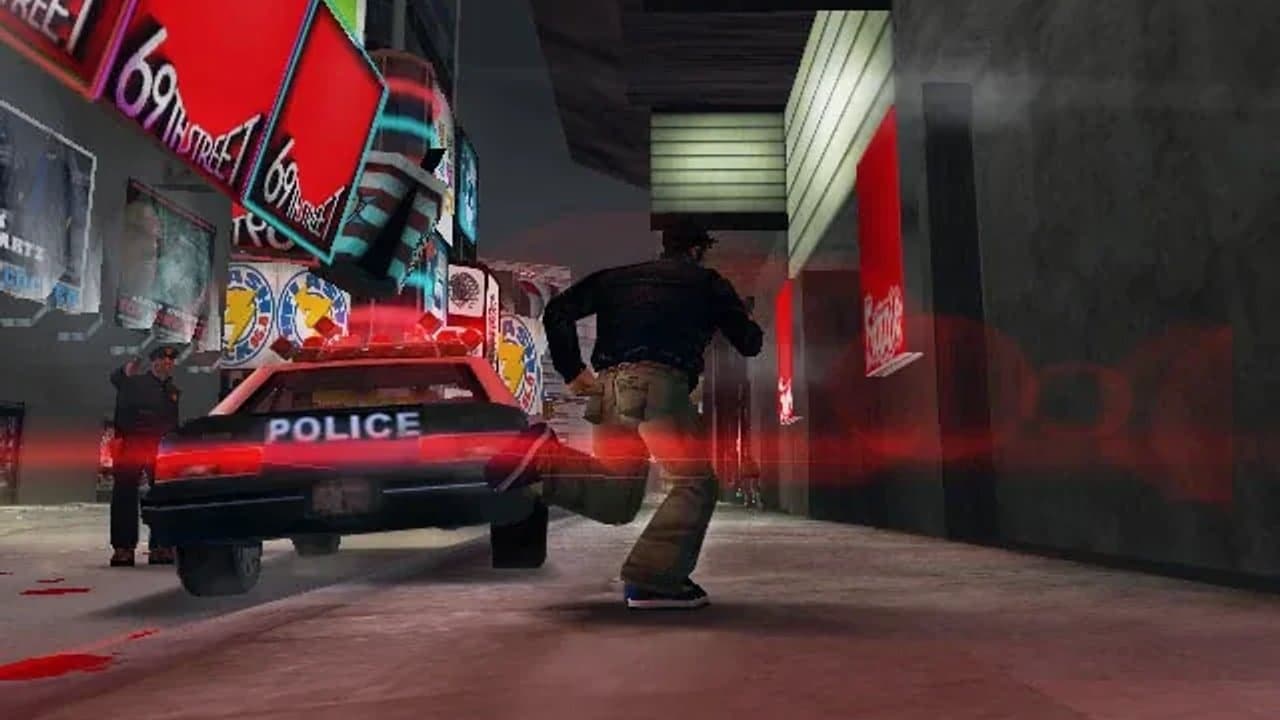
Liberty City is the most-used setting in Grand Theft Auto. It has appeared in some form across GTA III (2001), GTA Liberty City Stories (2005), GTA Advance (2004), GTA IV (2008), GTA IV's two episodic expansions (2009), and continues to feature on radio cross-references in every HD-era Rockstar game since. What most players miss is that the GTA III-era Liberty City and the GTA IV-era Liberty City are not the same city. They are different fictional cities sharing a name, in different Rockstar continuities, with rebuilt geography and reshuffled gangs. Here is the full map of how Liberty City changed.
The two universes
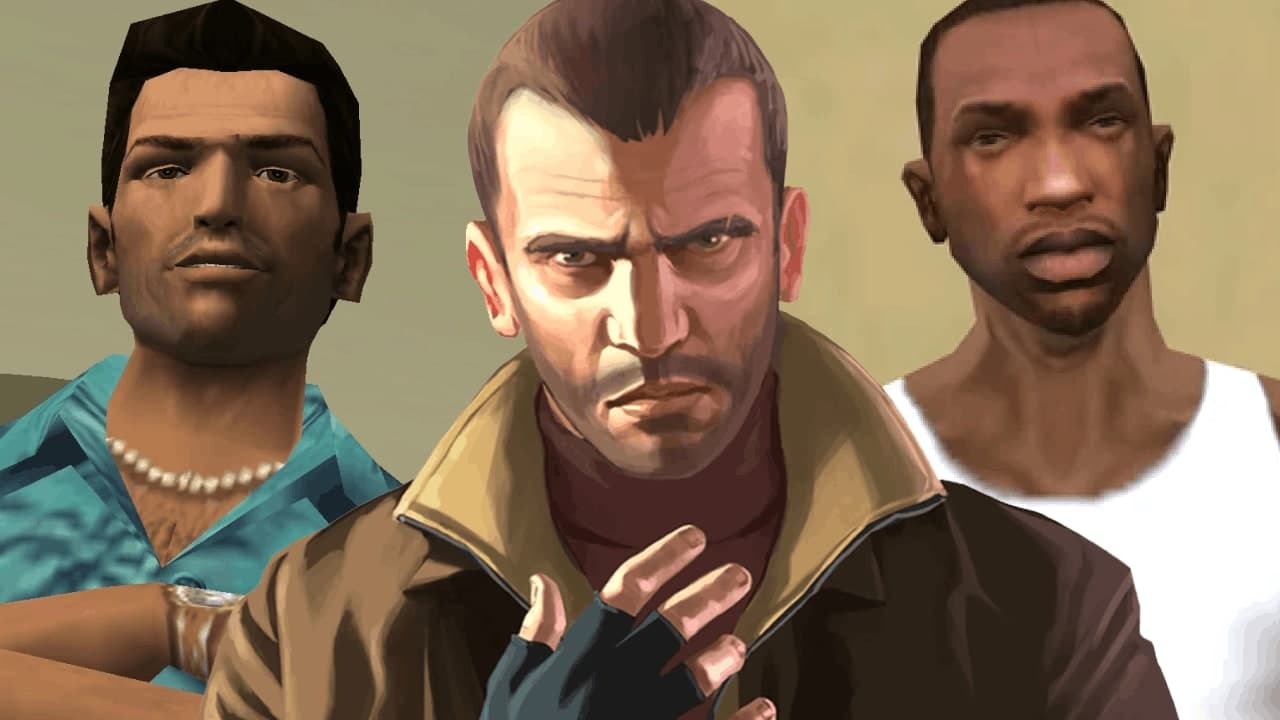
Rockstar's internal continuity has, for almost twenty-five years, been split into two non-overlapping fictional universes.
- The 3D Universe. GTA III (2001), GTA Vice City (2002), GTA San Andreas (2004), GTA Liberty City Stories (2005), GTA Vice City Stories (2006), and GTA Advance (2004). All on the PS2-era engines. Shared canon, shared characters, shared timeline.
- The HD Universe. GTA IV (2008), GTA IV's two expansions (The Lost and Damned + The Ballad of Gay Tony, 2009), GTA V (2013), GTA Online (2013 to present), and (by every public indicator) GTA 6 in November 2026. All on the RAGE engine. Shared canon, shared characters, shared timeline. The Red Dead Redemption games share the RAGE engine and occasional meta-references, but Rockstar treats Red Dead as a separate canon rather than part of the GTA HD Universe.
The two universes share brand names, radio stations, and tonal language, but they are explicitly not the same fiction. A 3D-Universe Liberty City character does not exist in the HD-Universe Liberty City. Both Liberty Cities exist. They are different places.
GTA III's Liberty City (2001)
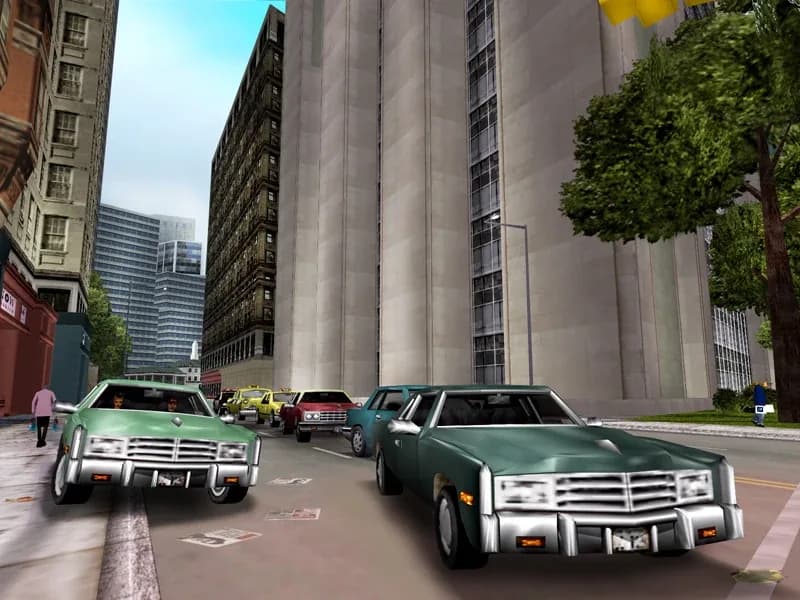
The original 3D-Universe Liberty City was unveiled in October 2001 as the setting for GTA III, the game that launched the entire 3D open-world genre. It comprises three islands.
Portland. The starting island. A dense, gritty district loosely inspired by Brooklyn and Queens, with strong Detroit and Leith influences mixed in (the city isn't a 1:1 New York). It is the headquarters of the Leone Crime Family, the dominant Italian-American mafia organisation in this version of Liberty City. Other Portland gangs include the Triads (Chinatown), the Diablos (a Hispanic gang), and a Yardies presence.
Staunton Island. The middle island, broadly modelled on Manhattan. Financial district, business towers, hospitals, government buildings, and the Yakuza as the dominant gang presence. Asuka Kasen's Staunton territory is the player's mid-game power base.
Shoreside Vale. The third island, drawing on Philadelphia and the New Jersey suburbs. Wealthier residential zones, the Cartel mansion, Cedar Grove, Pike Creek's industrial estate, and Francis International Airport. The end-game island where the Catalina arc closes out.
GTA III's Liberty City was, for its time, an enormous achievement. Three islands, multiple gangs, distinct neighbourhoods, full radio stations, a working day-night cycle. By modern standards it is small, blocky, and stylised. By 2001 standards it was a revelation.
Liberty City Stories (2005, set 1998)
The PSP prequel Liberty City Stories revisits the same 3D-Universe Liberty City three years earlier, in 1998. The geography is the same three-island layout, slightly adjusted (the bridges between Portland and Staunton are still under construction, for instance, reflecting the in-fiction 1998 timeline). The dominant fiction shifts: this is the story of Toni Cipriani's rise as a Leone family enforcer, and the Leone family's consolidation of Liberty City under Don Salvatore Leone.
It is the same city. It is also the same fiction. Liberty City Stories' events feed directly into GTA III's setup three years later.
GTA IV's Liberty City (2008)
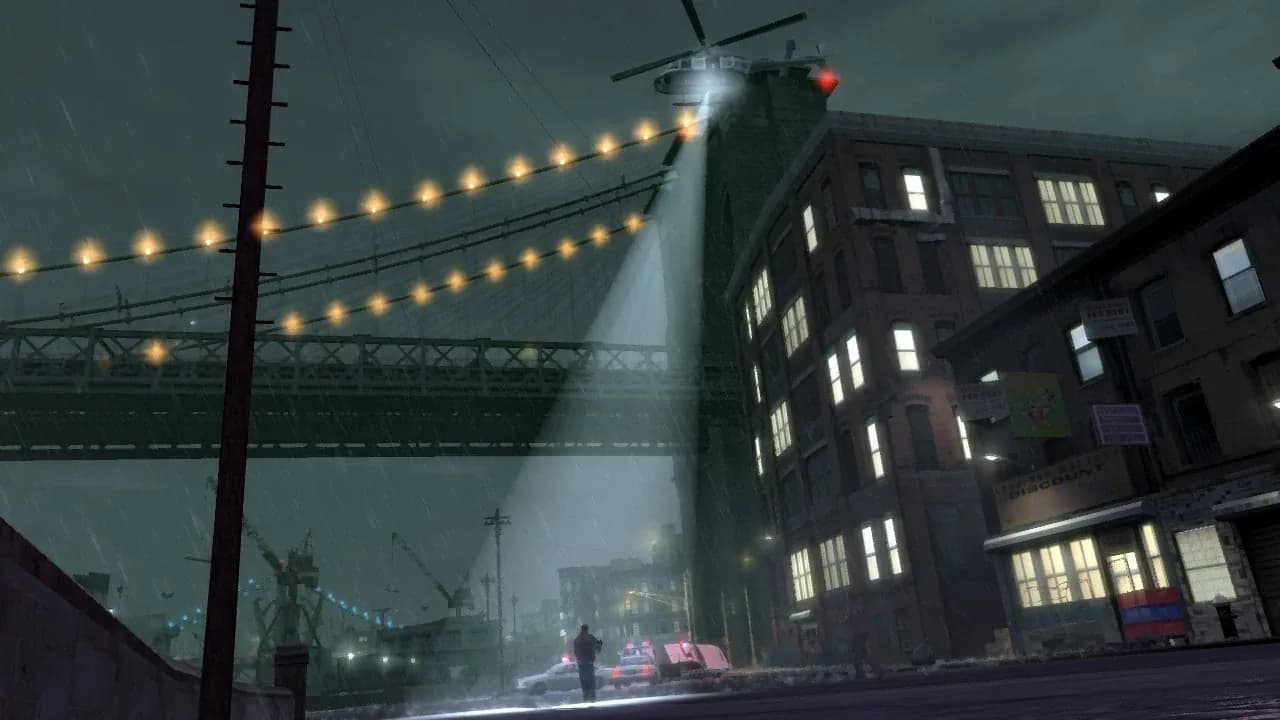
When Rockstar rebuilt Liberty City for the HD Universe in April 2008, almost nothing carried over geographically. The new Liberty City was redesigned from scratch on the RAGE engine, with substantially more detail and a more direct New York City mapping.
Five boroughs:
- Broker. Modelled on Brooklyn. Working-class Russian-American and Italian-American neighbourhoods. Hove Beach, the starting district, is a direct fictional echo of Brighton Beach.
- Dukes. Modelled on Queens. Working-class, suburban-feeling, ethnically mixed.
- Bohan. Modelled on the Bronx. Lower-income, predominantly Hispanic, the source of much of the game's drug-trade subplot.
- Algonquin. Modelled on Manhattan. The financial district (the equivalent of Wall Street), Star Junction (the fictional Times Square), and Middle Park (the fictional Central Park). The largest of the five boroughs.
- Alderney. Modelled on New Jersey. Across the river, technically a separate state in the fiction (Alderney is a state, not a borough), with the Pegorino crime family headquartered there.
What HD-era Liberty City lacks: a direct Staten Island analogue. The geography is otherwise far closer to actual New York than the 3D version was.
What carried forward
Three things stayed across the universes.
1. The name. "Liberty City" is the only Rockstar location that's used the same name across both universes. Vice City became Vice City Stories' Vice City in the 3D era, and the same name will return in GTA 6, but those are different city instantiations too. Los Santos is HD-only. San Fierro and Las Venturas are 3D-only.
2. The New York inspiration. Both versions are fictional New York, even though only one (GTA IV's) is a clean borough-for-borough mapping. The taxi-cab culture, the bridges, the financial district, the gritty street-level texture: all consistent across both versions.
3. The Italian-mafia presence. Both versions feature an active Italian-American mafia network as the dominant organised crime structure. The specific families changed (see below), but the structural role of Italian-American organised crime in Liberty City is the same.
What changed
1. The gang map was reshuffled. GTA III's Liberty City had the Leone, Forelli and Sindacco families (with the Leones dominant). GTA IV's Liberty City has The Commission: the Gambetti, Lupisella, Messina, Pavano and Ancelotti families, plus the Pegorino family in Alderney as an outside-Commission organisation pushing for a seat. None of the 3D-era families exist in the HD universe. None of the HD-era families exist in the 3D universe.
2. The non-Italian gangs changed. GTA III's Yakuza, Diablos, Triads and Cartel are largely absent from GTA IV. GTA IV adds the Russian mafia (Mikhail Faustin, Dimitri Rascalov, Ray Bulgarin), the McReary Irish family, the Albanian mob, Korean gangs, and a much more elaborate underworld map. The drug pipeline is different. The corruption is different.
3. The geography is rebuilt. Almost no street, building or neighbourhood from GTA III's Liberty City has a direct equivalent in GTA IV's. The two cities can be played back-to-back and feel like completely different settings. The closest pair of analogues is GTA III's Staunton and GTA IV's Algonquin, both being the Manhattan-stand-in, but even those are designed from scratch.
4. The scale grew. GTA IV's Liberty City is denser and substantially more detailed than the 3D-era version. Not always 4-5x bigger in raw area, but easily several times bigger in interior space, pedestrian density, building count, and accessible street-level detail.
What the HD Universe inherited
Beyond Liberty City itself, the HD Universe inherits a tone and structural template from the 3D era. The recurring use of recognisable real-world American cities, the satirical-but-functional radio ecosystem, the recurring NPC roster (Lazlow Jones, Fernando Martinez, and others who span both universes in different incarnations), and the willingness to revisit a setting decades apart in fiction.
GTA 6's return to Vice City in 2026, set in a Florida-equivalent state called Leonida, follows the same pattern Liberty City established. Same city name, rebuilt geography, different fiction, different protagonists. Forty in-fiction years between the 1986 Vice City and the modern Vice City. We've broken down what carries forward in the Vice City 1986 to Leonida bridge piece.
A quick reference table
| GTA III (2001, 3D) | GTA IV (2008, HD) | |
|---|---|---|
| Universe | 3D | HD |
| Number of districts | 3 islands | 5 boroughs (incl. Alderney) |
| Manhattan stand-in | Staunton Island | Algonquin |
| Brooklyn stand-in | Portland (mixed) | Broker |
| Queens stand-in | Portland (partial) | Dukes |
| Bronx stand-in | (no direct analogue) | Bohan |
| Jersey stand-in | Shoreside Vale (partial) | Alderney |
| Dominant Italian family | Leone | The Commission (Gambetti et al.) |
| Major non-Italian gangs | Triads, Yakuza, Cartel, Diablos, Yardies | Russian mafia, McRearys, Albanians, Koreans |
| Engine | RenderWare | RAGE |
For more on the 3D-era Liberty City, see our GTA III three islands explainer and GTA III mafia/triads/yardies gangs chart. For the don who held the Leone family together across both Liberty City Stories and GTA III, see our Salvatore Leone profile.
Sources
- Grand Theft Auto III on Wikipedia. Original game and Liberty City structure.
- Grand Theft Auto IV on Wikipedia. HD-era Liberty City rebuild.
- Liberty City (HD Universe) on the GTA Wiki. HD-era Liberty City detail.
- HD Universe on the GTA Wiki. Continuity framework starting with GTA IV.
- 3D Universe on the GTA Wiki. 3D-era continuity framework.
- The Commission on GTABase. HD-era Italian-American mafia families in Liberty City.
- Rockstar Games: Grand Theft Auto IV official site. Publisher's source on the HD-era city.