Hot Coffee: The San Andreas Mod That Changed Video Game Ratings Forever
In the summer of 2005, a Dutch modder unlocked hidden sexual content inside Grand Theft Auto: San Andreas. Within six weeks the ESRB had revoked the game's rating, three retailers had pulled it from shelves, and a US senator had filed a bill aimed at the games industry. Here's exactly what happened, and why the games industry is still living with the consequences.
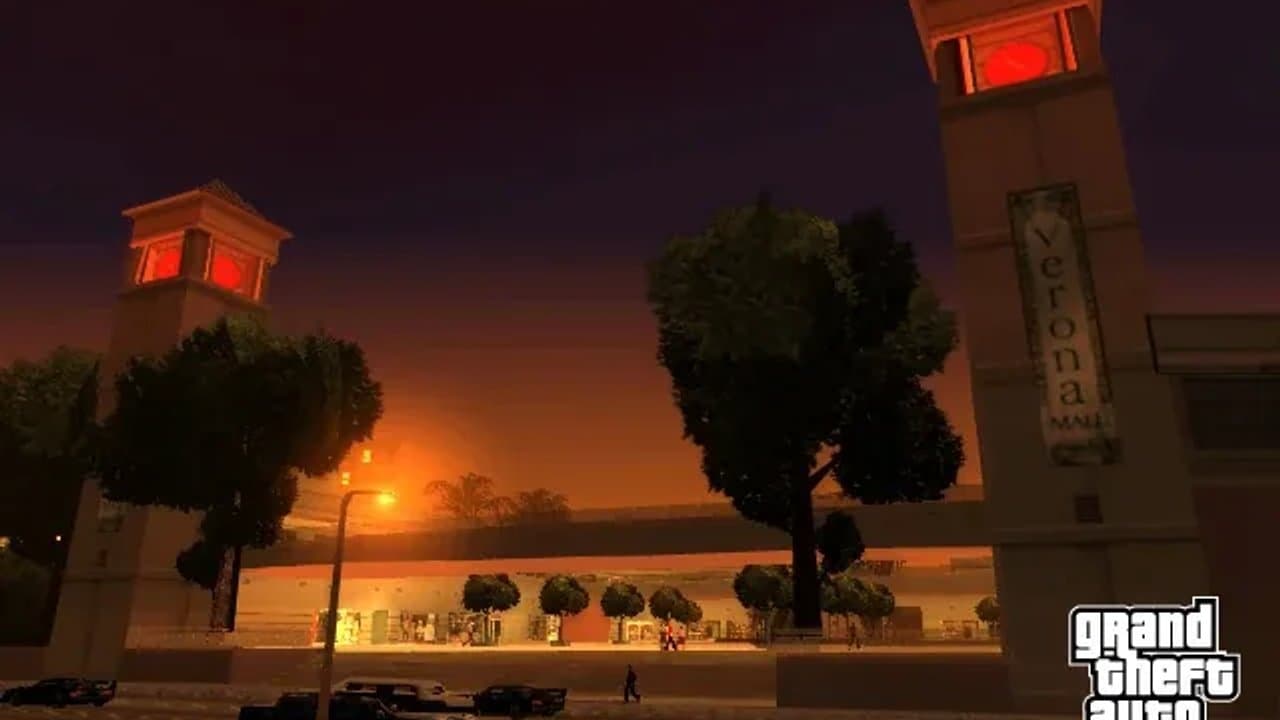
In June 2005, a Dutch modder named Patrick Wildenborg published a small mod to GTAGarage.com that re-enabled cut content hidden inside Grand Theft Auto: San Andreas. Six weeks later the Entertainment Software Rating Board had stripped the game of its M rating, three major retailers had pulled it from shelves, Take-Two had recalled millions of copies, US Senator Hillary Clinton had filed a bill targeting the games industry, and Rockstar's parent company had taken a multi-million-dollar inventory hit. The episode, universally known as Hot Coffee, is the single most consequential modding controversy in video game history, and the games industry's ratings and content-disclosure rules still operate within the frame it set. Here is the full story.
What Hot Coffee actually was
Buried in San Andreas' final game files, on the disc that shipped to retail in October 2004 on PS2, Xbox and (in mid-2005) PC, was a sexual mini-game between CJ and his girlfriends. The mini-game involved a rhythm-based interaction inside a girlfriend's home after a successful date. The content was complete, animated, voice-acted, and fully rendered. Rockstar had cut it from the shipping version of the game.
What Rockstar had not done was delete it. The assets sat on every retail disc, locked behind a flag in the code. On PC, that flag was trivially flippable. On PS2 and Xbox, it was accessible via Action Replay cheat-device codes once the existence of the content was known.
Wildenborg, a longtime San Andreas modder, found the locked content while exploring the game's files in early 2005. On June 9, 2005, he published the Hot Coffee mod on the modding site GTAGarage.com. The mod flipped the relevant flag on the PC version. Within four weeks, it had passed one million downloads. Within six, the entire games industry was on fire.
The ESRB response
The Entertainment Software Rating Board, the games industry's self-regulating ratings body, opened an investigation in early July 2005. On July 20, 2005, the ESRB published its findings. The locked content was, by their judgment, present on the original retail disc across all three platforms and not the product of a third-party modification of the files. The mod merely unlocked what Rockstar had shipped.
The ESRB revoked San Andreas' M (Mature 17+) rating and re-rated the game AO (Adults Only 18+). It was, and remains, an essentially commercial death sentence. Console manufacturers refused to license AO-rated games for their platforms. Major retailers refused to stock them. An AO rating in 2005 meant the title could not be sold through normal retail.
The retail fallout
Within hours of the ESRB ruling, the major US retailers responded:
- Walmart pulled San Andreas from all stores.
- Best Buy pulled it.
- Target pulled it.
- GameStop, Blockbuster and Sears followed within days.
Take-Two issued an immediate recall, halted manufacture of the original release, and produced a "second edition" of the game with the Hot Coffee content removed from the disc entirely (version 2.00 and later on PC, and re-pressed PS2/Xbox discs). The second edition retained the M rating.
What it cost Take-Two
Take-Two disclosed the financial impact in its August 2005 SEC filings. The company recorded approximately $24.5 million in returns and inventory costs tied to the recall. Q3 FY2005 reported a roughly $28.8 million quarterly loss attributable in large part to the rating revocation. Take-Two's stock price fell sharply on the news but a specific single-day percentage drop is not the cleanest number to cite, as the slide played out across several weeks of ratings-related disclosures.
The lawsuits
Three significant legal actions followed.
1. The consumer class-action lawsuit. Settled in 2007. Take-Two's exposure was capped at $2.75 million, with an additional $870,000 charitable contribution built into the settlement. The actual claimant payout came out to under $30,000 total once class participation was tallied, with the bulk of the settlement going to administrative and legal costs. The disparity became, in itself, a story.
2. The FTC settlement. On June 8, 2006, Take-Two settled with the Federal Trade Commission via a consent order. No fine was levied at the time. The agreement instead created a mechanism: if Take-Two violated the disclosure requirements going forward, the FTC could impose a $11,000 per-violation civil penalty. The consent order also formalised Take-Two's obligation to disclose all relevant content to ratings boards during submission.
3. The securities class action. Investors sued Take-Two over the company's failure to disclose the Hot Coffee content's existence to the ESRB during the original M-rating submission. Settled in 2009 for $20.115 million, of which Take-Two paid approximately $4.915 million out of pocket; insurers covered the remaining $15.2 million.
Plus a separate City of Los Angeles suit, filed by City Attorney Rocky Delgadillo in January 2006, which Take-Two settled. Plus other state-level actions that closed quietly.
The political response
The most consequential non-legal response was political. US Senator Hillary Clinton (D-NY) wrote to the FTC on July 14, 2005 requesting an investigation, framing Hot Coffee as evidence that the ratings system was inadequate. On December 16, 2005, Clinton joined Senator Joe Lieberman, Senator Evan Bayh and Senator Tim Johnson in introducing the Family Entertainment Protection Act (S. 2126).
FEPA proposed federal enforcement of ESRB ratings at retail, making it a federal violation to sell M-or-AO-rated games to minors. The bill never made it out of committee. But the legislative threat itself shifted the games industry's calculus on content disclosure, and the ESRB's subsequent reforms were partly a response to the political pressure FEPA represented even though the bill never became law.
The reforms
The ESRB introduced changes to its rating process within months of the Hot Coffee findings:
- Mandatory full-disclosure of all content present in the final shipping product, including content that is locked or unreachable through normal play.
- Penalties for publishers who fail to disclose, formalised in the FTC consent order.
- Stricter pre-release review of submitted titles, including spot-checks of disc contents.
- Adoption of additional content descriptors on ratings labels, refined in subsequent years.
For Rockstar specifically, Hot Coffee marked the end of an era. The studio shipped GTA IV in April 2008 with a noticeably more cautious approach to cut content: deleted assets were genuinely deleted, not flagged off, and the studio's publicly available development materials moved away from the looser disc-management practices of the PS2 era. The pattern has held across RDR2, GTA Online's content releases, and the studio's PR communications around GTA 6.
Why it still matters in 2026
Twenty-one years after release, the legacy of Hot Coffee is everywhere in the modern games industry:
- The "everything on disc must be disclosed" rule is ESRB doctrine. Locked content is treated as shipped content for ratings purposes.
- Publishers are paranoid about hidden assets. The QA pass for AAA games now includes specifically looking for unflagged or partially-flagged content that could embarrass the studio post-launch.
- Modding communities are watched closely. Rockstar and other publishers have, since 2005, paid more attention to high-profile mods of their games than to almost any other community-driven content layer.
- The "video games as adult medium" framing got political. The FEPA bill was the high-water mark of the 2000s moral panic. The legal and political consensus settled, more or less, in favour of the existing ESRB self-regulation regime, but Hot Coffee was the case that nearly broke it.
It also marks the GTA series itself. The franchise had been controversial before, but Hot Coffee was the first time the controversy translated into recalls, retail bans, FTC settlements and Senate bills. Rockstar emerged with the brand intact and arguably amplified. The strategic lesson, repeatedly cited by industry analysts in the years since, was that even a near-corporate-disaster did not damage GTA's commercial momentum. GTA IV sold over $500 million in its opening week three years later.
The wider lesson the industry took: don't ship hidden content. Or if you do, delete it properly, not with a flag a modder can flip in an afternoon.
For more San Andreas history, see our Big Smoke betrayal arc explained and San Andreas hardest mission piece.
Sources
- Hot Coffee minigame on Wikipedia. Full historical overview.
- ESRB: Concludes investigation into San Andreas, revokes M rating (July 20, 2005). The official ratings revocation.
- FTC: Makers of GTA: San Andreas settle FTC charges (June 8, 2006). The consent order.
- Take-Two 8-K FY2006 (SEC filing). $24.5M in returns and inventory costs.
- Take-Two 8-K FY2009 (SEC filing). $20.115M securities class action settlement, $4.915M Take-Two contribution.
- Family Entertainment Protection Act on Wikipedia. Clinton/Lieberman bill, introduced December 16, 2005.
- Kotaku: Take-Two reaches $20M settlement in GTA Hot Coffee suit. Securities settlement reporting.
- Shacknews: Rockstar pays under $30,000 in Hot Coffee settlement. Consumer class-action payout detail.
- S.2126 109th Congress on Congress.gov. Official record of FEPA.