Rockstar Is Paying Miami-Dade Just Under $1 Million to Put 'Welcome to Vice City' on the Heat's Arena, and Commissioners Found Out at 1:30 in the Morning
A helicopter spent Tuesday lifting giant letters onto the roof of the Kaseya Center. The deal behind them was disclosed at 1:30am during a county budget meeting, signed by the mayor without a commission vote because it came in under the $1 million threshold. Here is the money, the quotes, and how it differs from the Miami Beach deal.
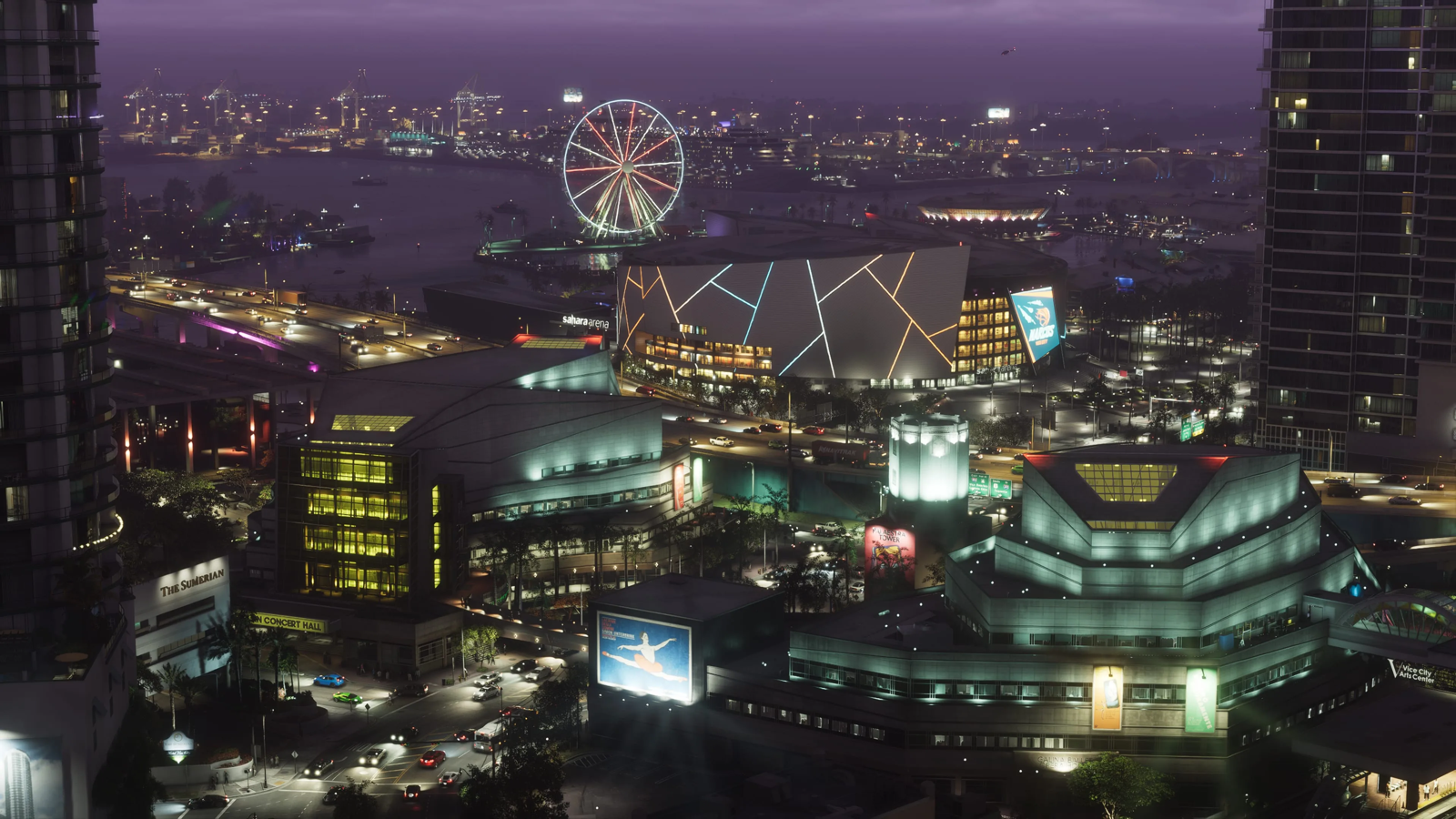
On Tuesday a helicopter hovered over downtown Miami, lifting giant letters one at a time onto the roof of the Kaseya Center, home of the Miami Heat. Assembled, they will read "Welcome to Vice City." The perimeter around the arena was closed off for the morning, and the clips went everywhere.
The deal behind them is the more interesting story, and it was disclosed at about 1:30 in the morning during a Miami-Dade County budget meeting that ran past 1am, to commissioners who mostly had not heard about it. Rockstar is paying the county close to $1 million for it. The mayor signed it without a commission vote, because she was allowed to: her delegated authority covers contracts under $1 million, and this one came in beneath that line.
What was announced, and when
At the county's second budget hearing overnight from Thursday September 17 into Friday September 18, Christopher Hudtwalcker, chief of staff to Mayor Daniella Levine Cava, told commissioners the county had signed a marketing agreement with Rockstar Games to mount the sign on the county-owned arena. He called GTA 6 "the biggest cultural phenomenon of the year," and said Rockstar was paying "close to $1 million." Miami Herald county reporter Doug Hanks put the figure at $975,000.
Two details make that number matter. Levine Cava signed the agreement under her delegated authority to execute contracts under $1 million without board approval, so no commission vote was required and none happened. And the proceeds are earmarked for developing Dan Paul Plaza, also known as Parcel B, the county-owned waterfront lot behind the arena that has been promised to the community as public space for years.
Hudtwalcker also told commissioners that negotiations were under way for further signage at other county properties.
The commissioners were not delighted
The pushback at the meeting split into two arguments, and only one of them was about video games.
The process argument. Commissioner Oliver Gilbert III raised the structural objection: "I do not agree that you can do $900,000 for this, and $700,000 for this," the point being that a series of agreements each sitting under the $1 million threshold can be used to route around a board vote. Commissioner Natalie Milian Orbis put it more plainly: "I would've appreciated more information." Commissioner Anthony Rodriguez also said he wanted more information about the deal.
The content argument. Commissioner Juan Carlos Bermudez objected to what the county was advertising: "It's a game where police officers are killed, pedestrians are run over," and added that the county spent "a very long time going from Paradise Lost to a wonderful international community." He suggested that if more Rockstar money arrives, "that money should go to the sheriff's office." Miami-Dade Sheriff Rosie Cordero-Stutz has also been publicly critical of the county partnering with the game.
Commissioner Keon Hardemon landed somewhere in between, with the line most likely to be quoted back at him: "If you shoot at a police officer, you better believe it's gonna be a 'five-star crime,' and all the police officers in Miami-Dade County are coming after you." He also acknowledged the obvious: "It's a video game. I do believe that this is gonna be a marketing phenomenon."
A small correction on the commissioner's behalf: GTA 6 is bringing back the six-star wanted level, which Rockstar confirmed in the Extended Look and which we covered in our gameplay breakdown.
This is not the Miami Beach deal
Three different governments are now tangled up in GTA 6's marketing, and they keep getting confused for each other.
- Miami-Dade County is the one described above: the Kaseya Center rooftop sign, just under $1 million, signed by the mayor without a board vote, money toward Parcel B. The letters went up this week.
- The City of Miami Beach is a separate municipality. Its commission voted 4-3 on September 10 to let its city manager negotiate a deal to put GTA 6 branding on beach chairs and umbrellas from October 15, reportedly worth $3 million to $4 million. That resolution named no dollar figure and no contract had been signed at the time. We covered that vote, and the "we're not giving away pistols and cocaine" argument around it, here.
- The City of Miami is a third government, separately considering large temporary banners downtown.
The distinction is not pedantry. Miami Beach's deal needed a public vote and got a contested one. The county's did not need a vote and did not get one, which is precisely why its own commissioners were annoyed to read about it.
Why Rockstar wants a rooftop in downtown Miami
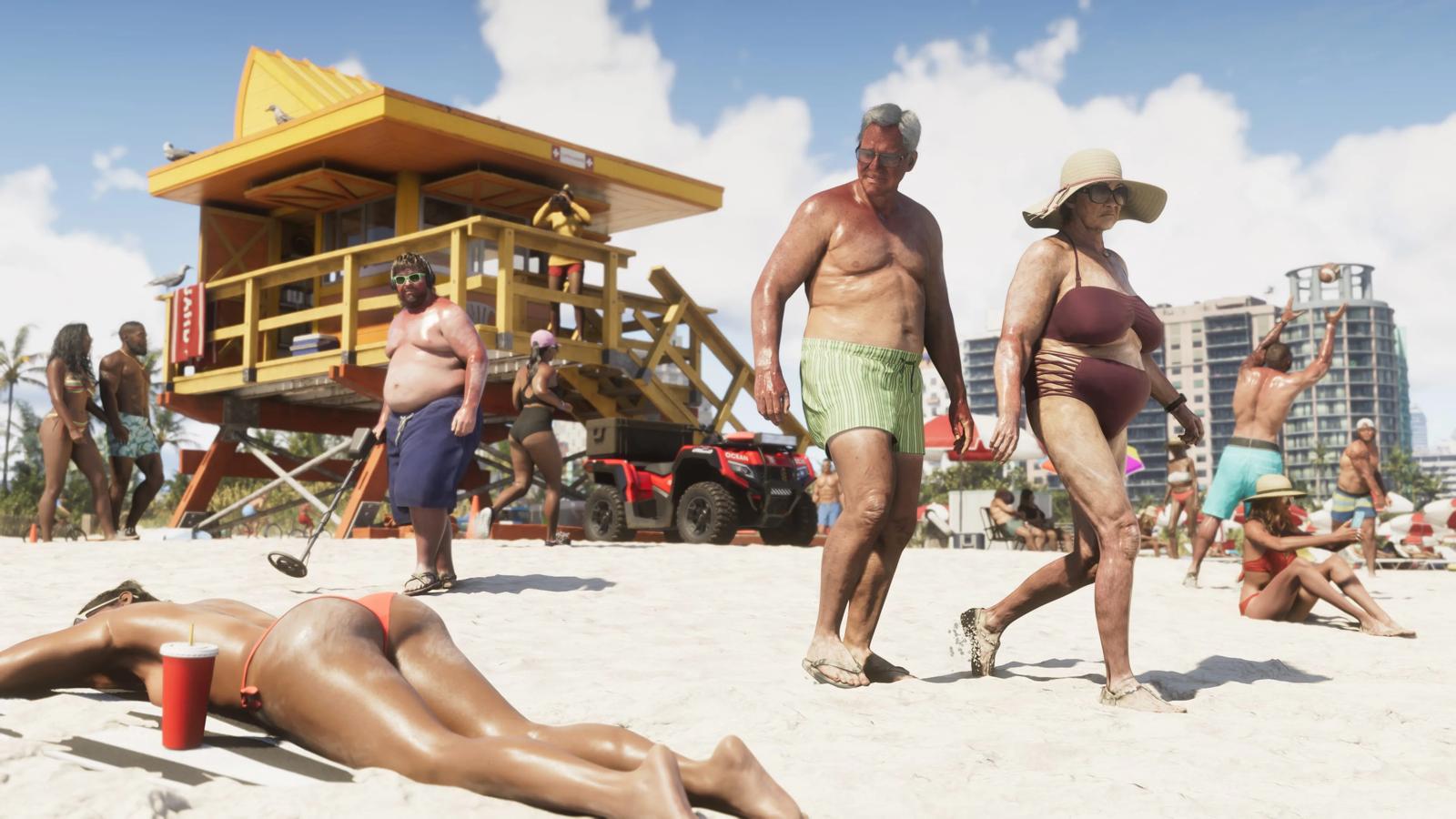
Vice City is Miami, and Rockstar has spent this campaign collapsing the distance between the two. The arena sits on the waterfront at the centre of the skyline that appears in GTA 6's own screenshots, in the sightline of every downtown camera, every Heat broadcast and every tourist photo. A sign that says "Welcome to Vice City" on the most photographed rooftop in the city is not a billboard buy; it is a claim that the real city and the fictional one are the same place.
It also fits a pattern. Sony has been running GTA 6 on digital billboards in Tokyo, Spotify put the artist artwork on boards in New York, Los Angeles and Miami ahead of the album, and Rockstar has more than 50 real street artists painting murals in the game itself. Eight weeks out, the marketing is physical and it is aimed at the city GTA 6 is about.
What is still unclear
Rockstar and Take-Two have not commented publicly on the agreement, and neither has released its terms. The county has not published the contract. How long the sign stays up, what the agreement says about renewals, and whether the further county signage Hudtwalcker mentioned gets a board vote are all open. Figures circulating about the sign's square footage, its structural weight and a multi-year term trace to secondary sites rather than the county or Rockstar, so treat them as unconfirmed until the contract is public.
The bottom line
Rockstar is paying Miami-Dade County close to $1 million, reported as $975,000, to put "Welcome to Vice City" on the roof of the Kaseya Center, with the money earmarked for a waterfront park behind the arena. The mayor signed it without a commission vote because it fell under her $1 million authority, commissioners learned about it at 1:30am, and the letters went up by helicopter on September 22. GTA 6 launches November 19, 2026 on PS5 and Xbox Series X|S.