The Ballad of Gay Tony: GTA IV's Second Expansion, Explained
Luis Lopez, Tony Prince, and Liberty City's club scene — The Ballad of Gay Tony is GTA IV's brightest expansion and its most fun on first run-through.
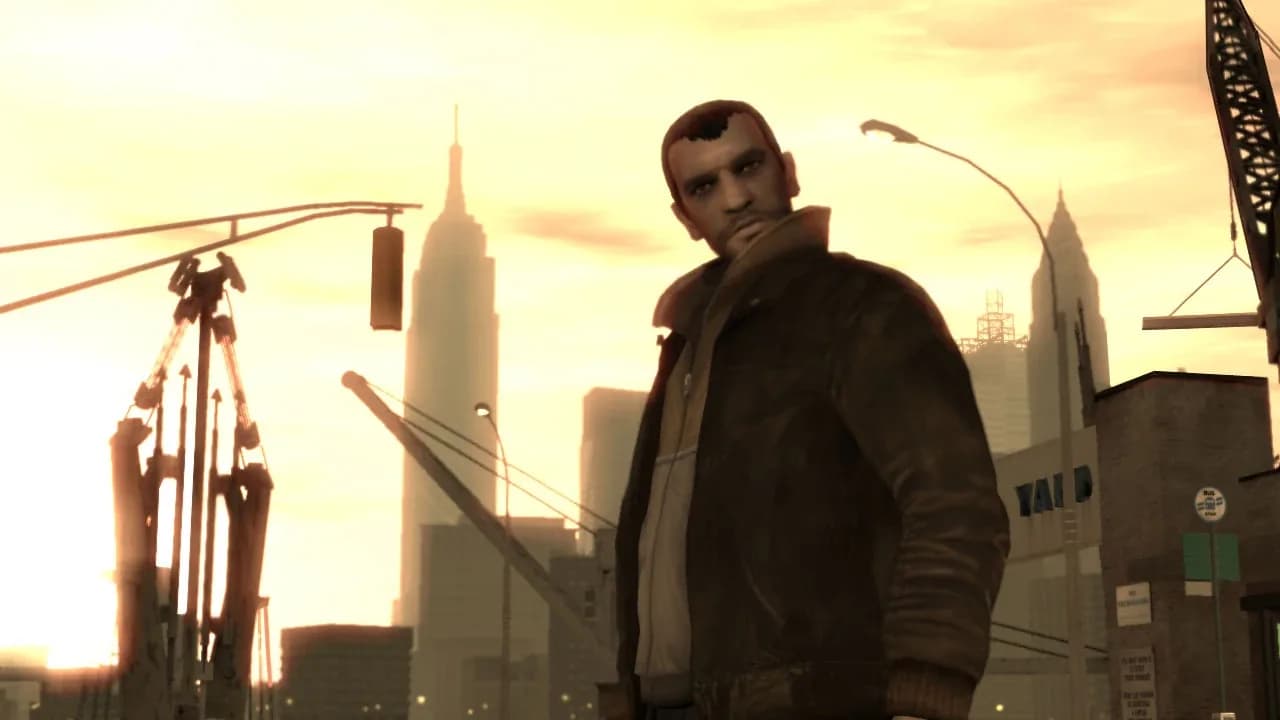
Released in October 2009 as the second of GTA IV's two episodic expansions, The Ballad of Gay Tony is the brightest and most-mechanically-different of the three GTA IV story experiences. Where Niko's main campaign is about disillusionment and Johnny Klebitz's Lost and Damned is about decline, Luis Lopez's Gay Tony is about climbing — Liberty City through the lens of nightclub management, parachute jumps, and high-stakes triad warfare.
Below: who Luis is, who Gay Tony is, and where the expansion fits in GTA IV canon.
Who Luis Lopez is
Luis Fernando Lopez — voiced by Mario D'Leon — is a Liberty City Dominican-American who works as Tony Prince's right-hand man and bouncer at Tony's nightclubs. Luis is from a working-class Algonquin background, fiercely loyal to his mother (Adriana) and brother (Ernesto), and uses the Tony Prince job to support his family.
Luis is the most physically capable of the three GTA IV protagonists — better aim, better reflexes, more athletic than Niko or Johnny. The expansion's mechanics reflect this: parachuting, base-jumping, helicopter combat, and tight cover-shooting all play more responsively than in the main campaign.
Who "Gay Tony" Prince is
Anthony "Gay Tony" Prince — voiced by DB Cooper — is a flamboyantly gay nightclub owner who runs Maisonette 9 (Algonquin) and Hercules (Liberty City's other major club). Tony is a mid-career impresario whose business is collapsing under bad debts to multiple criminal organisations.
Tony is not playable. He's the constant employer / friend / chaos-vector across Luis's campaign, with personality somewhere between Tony Stark's swagger and a trauma-driven hot mess. His debts drive the entire plot.
The campaign
Luis's arc spans three rough phases:
- The clubs. Tony's nightclubs are bleeding money. Luis works to keep them open through a combination of legitimate management work and increasingly criminal side hustles.
- The diamonds. The cross-campaign diamond subplot runs through Luis's perspective. The bag of diamonds that appears across all three GTA IV stories ends up in Luis's possession at the climax. This is the point of view from which the diamond saga makes most sense.
- The Mori Kibbutz / Ray Bulgarin endgame. Tony's debts collapse into Russian and Italian mob enforcement; Luis's third act is escalating warfare on multiple fronts.
The campaign closes with Luis alive, Tony alive, the clubs in ruins, and the diamonds destroyed.
Cross-campaign references
Ballad of Gay Tony intersects with the main GTA IV and Lost and Damned at multiple points:
- The diamonds appear here for the third time across the GTA IV trilogy
- The Three Leaf Clover bank heist is shown from a club bystander's view (Luis isn't involved)
- Brucie Kibbutz appears as a recurring character (he's the brother of Mori Kibbutz, one of the antagonists)
- Roman Bellic's wedding is referenced indirectly
- The McRearys, Faustins, Ray Boccino all recur
The expansion is the third perspective — the high-society lens that complements Niko's working-immigrant view and Johnny's outlaw-biker view.
What's mechanically different
Ballad of Gay Tony introduces several mechanics not in the main GTA IV:
- Parachuting — full base-jumping system, including fixed-point jumps and free-roam parachutes
- Helicopter combat with explosive miniguns — far more aggressive air combat than the main campaign
- Snipers and tanks — both upgraded to be more usable than Niko's versions
- Club management mini-games — running the door at Maisonette 9, dancing, drinks
- Triathlons — base-jumping, motorcycle-racing, and arm-wrestling sub-sports
The expansion's tone is the lightest in the GTA IV trilogy — overtly comic in places, with explicit MTV-club-culture satire and a deliberately upbeat color palette.
Why it works as a finale
Of the three GTA IV experiences, Ballad of Gay Tony is the most replay-friendly. The main campaign is heavy; Lost and Damned is bleak; Ballad is fun. New players often start here.
The expansion also closes the GTA IV trilogy on its strongest mechanical note — the parachute system in particular feels like a preview of what GTA V (2013) would do four years later. Many of GTA V's air-combat mechanics trace back to Ballad of Gay Tony.
Where to play it
Ballad of Gay Tony shipped on Xbox 360 in October 2009 and is bundled with the main GTA IV and Lost and Damned in GTA IV: The Complete Edition on PS3, Xbox 360, PC, and Steam. Available on most digital storefronts.
For the broader GTA IV story, see GTA IV's Liberty City Story Primer and The Lost and Damned Explained.