Vice City Stories vs Vice City: How the 1984 Prequel Changed the Canon
The 2006 prequel Vice City Stories is set two years before the original, follows Victor Vance, and quietly retconned several Vice City character arcs. Here's the comparison.
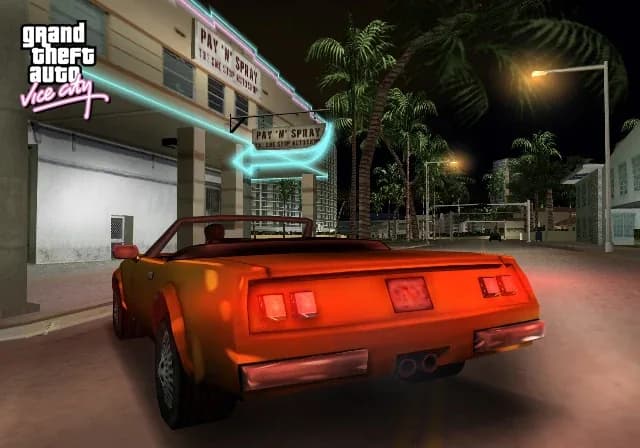
In October 2006, Rockstar released Grand Theft Auto: Vice City Stories as a PSP exclusive (later ported to PS2). Set in 1984, two years before the original Vice City, the prequel follows Victor Vance — older brother of Vice City's eventual betrayer Lance Vance — and quietly retconned several Vice City character arcs while filling in the city's pre-Tommy criminal landscape.
Below: the comparison, the retcons, and which version of Vice City matters more in 2026.
Setting and timeframe
| Vice City (2002) | Vice City Stories (2006) | |
|---|---|---|
| Set in | 1986 | 1984 |
| Protagonist | Tommy Vercetti | Victor Vance |
| Voice | Ray Liotta | Dorian Missick |
| Map | Vice City (full) | Vice City (slightly modified) |
| Platform at launch | PS2 | PSP |
| Length | ~30 hours | ~25 hours |
Both games take place on essentially the same map, but VCS includes a few 2-year-earlier modifications — some buildings under construction, some businesses with different signage, the Vercetti Estate (then Diaz Estate) showing slightly different decoration.
Who Victor Vance is
Victor Vance is Lance Vance's older brother. The character is positioned as a more grounded, less self-involved figure than Lance — Victor is military, recently discharged, trying to support his sick younger brother Pete and his troubled relationship with Lance. Where Lance is charismatic and unreliable, Victor is reliable and quietly competent.
Victor's arc in VCS is essentially building the Vance brothers' criminal operation from nothing — running drugs, building a gang ("the Vance Crime Family"), accumulating safehouses, eventually controlling significant Vice City territory by the time Tommy arrives in 1986.
The campaign closes with Victor mid-arc — alive, building the Vance operation, with Lance gradually becoming his less-reliable second.
The retcons
VCS retroactively recontextualises several Vice City character arcs:
Lance Vance's character
In Vice City (2002), Lance arrives at the docks fresh — a stranger to Tommy, presumably rescuing him by chance. VCS confirms that Lance had already been operating in Vice City for years prior to Tommy's arrival. This makes the Vice City opening scene less coincidence (Lance happens to be there) and more strategic (Lance is an established operator who knew about the deal).
It also makes Lance's third-act betrayal feel predetermined rather than situational. VCS shows Lance was always self-interested.
The Mendez brothers
VCS introduces the Mendez brothers as the controlling Vice City crime family in 1984. They're killed off in VCS's final acts, which is why they don't appear in 2002's Vice City — there's a gap between the Mendez brothers' fall and Diaz's rise that VCS implicitly fills in.
Phil Cassidy
Phil Cassidy is a recurring character in VC, VCS, San Andreas, and even appears (older) in the 2026 GTA 6 trailers. VCS shows Phil's earlier years before the missing-arm injury — he has both arms throughout VCS's 1984 timeline.
The Vercetti Estate
In Vice City (2002), the mansion belongs to Ricardo Diaz before Tommy takes it. VCS shows the same mansion belonging to a different owner in 1984 — the Mendez brothers' associates. The property changes hands twice between 1984 and 1986.
What VCS adds mechanically
VCS introduced several mechanics that the original Vice City didn't have:
- Empire Building — a property-territory system. Victor can take over Vice City buildings as criminal "fronts" (smuggling, prostitution, robbery, drugs, protection). Each takeover involves a brief mission and the property generates daily revenue. This is the asset-property mechanic from VC scaled up significantly.
- Swimming — VCS finally lets the protagonist swim. Vice City's Tommy drowns instantly on water contact. Victor can swim properly.
- Motorcycles that handle better than VC's. Significant retuning.
- Helicopters with proper combat-ready setups.
- Wall-jump and ledge-grab mechanics that VC didn't have.
Several of these mechanics — particularly Empire Building — were carried into San Andreas and beyond.
Which is better?
The honest comparison:
- Story: Vice City (2002) wins. Tommy's arc is tighter; Ray Liotta's voice work is stronger; the supporting cast (Sonny Forelli, Diaz, Lance Vance) is more memorable than VCS's.
- Mechanics: Vice City Stories (2006) wins. Empire Building, swimming, refined motorcycles — VCS feels like a more polished open world.
- Map: Tied — same map, mostly the same content.
- Length: Vice City is longer and denser; VCS is more focused.
If you can only play one, Vice City (2002) remains the canonical text. VCS is essential supplementary material if you want to understand why Lance's betrayal in 2002 reads as inevitable rather than sudden.
Where to find each version
- Vice City (2002) — original PS2, original PC, Definitive Edition (2021, all platforms), iOS / Android (separate port).
- Vice City Stories (2006) — original PSP, PS2 port (2007), PS3 / PS Vita digital ports. VCS is not in the Definitive Edition trilogy, and Rockstar has not re-released it for PS4/PS5/Switch/Xbox/PC.
If you want VCS in 2026, you're playing it on legacy PSP/PS2 hardware or via emulation.
For the canonical Lance Vance arc in the original game, see The Lance Vance Subplot. For the original Vice City retrospective, see Vice City's 1986 Meets GTA 6's Leonida.