The Lance Vance Subplot: Vice City's Most Memorable Betrayal
Lance Vance — voiced by Philip Michael Thomas — is Tommy's mid-game ally and third-act betrayer. Here's the full Lance arc and why it still works.
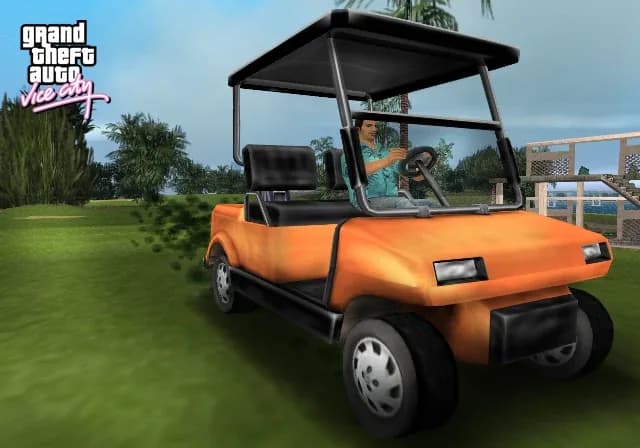
Lance Vance is Vice City's second-most-important character after Tommy Vercetti. Voiced by Philip Michael Thomas (Crockett's partner Tubbs in Miami Vice) in his only major video-game role, Lance is the mid-game ally who eventually becomes the campaign's most painful betrayal. The arc still works as a character beat twenty-two years after release.
Below: the full Lance arc, the betrayal, and why the character casting was a coup.
Who Lance is
Lance Vance is introduced at the docks during the campaign's opening — he's the helicopter-pilot rescuer who pulls Tommy out of the failed drug deal that opens the game. The Vance brothers (Lance and his brother Victor, who is later the protagonist of Vice City Stories in 2006) are positioned as independent operators trying to take revenge on the same Vice City powers that double-crossed Tommy.
Lance becomes Tommy's primary ally through the second act. He runs missions alongside Tommy, gets shot up midway through, recovers, and is positioned as Tommy's right-hand man for the rest of the game.
The mid-game
Lance's mid-game arc is mostly ride-alongs. He flies the helicopter for the "Diaz Penthouse" sequence (the mission where Tommy kills Ricardo Diaz and takes over the Vercetti Estate). He's wounded during that mission. He recovers at Tommy's medical contact, comes back, and runs missions through the third act.
By the third act Lance is second only to Tommy in the operation hierarchy — he handles distribution, runs missions Tommy can't make, and is positioned as the inheritor-apparent of the Vercetti empire if Tommy doesn't survive the Forelli confrontation.
The betrayal
The third act's pivot is Lance's betrayal. After Sonny Forelli arrives in Vice City to collect Tommy's debt, Lance — frustrated at being passed over, resentful at the second-fiddle status — sells Tommy out to Sonny. The betrayal is exposed in the campaign's final mission, "Keep Your Friends Close."
That mission is the closing of the campaign:
- Sonny's Forelli soldiers attack the Vercetti Estate
- Lance is revealed to be working with Sonny
- Tommy fights through the estate, kills Lance on the upper floor
- Tommy confronts Sonny in the basement and kills him
- Tommy is alone — empire intact, allies dead
The mission's title is the punchline: keep your friends close. Lance Vance was the friend Tommy didn't keep close enough.
Why the casting was a coup
Philip Michael Thomas was a major late-career signing for Rockstar in 2002. Miami Vice (1984-1989) was the cultural touchstone Vice City explicitly references — the show where pastel suits, neon, drugs, and Miami crime created the visual vocabulary the game inherits. Casting Thomas as a partner-figure (Lance Vance to Tommy's Vercetti) was a direct on-the-nose homage to Crockett & Tubbs.
Thomas's voice performance is genuinely good. Lance is charismatic, slightly insecure, easily wounded by social slights — all qualities that make the betrayal feel inevitable in retrospect.
Thomas reportedly was paid considerably more for the Vice City role than Ray Liotta was for Tommy, which contributed to Liotta's later public frustration. Thomas himself has spoken positively about the Vice City work in interviews.
The Vance Brothers in Vice City Stories
The 2006 PSP / PS2 prequel Vice City Stories reframes the Vance family entirely. Set in 1984 (two years before Vice City), VCS makes Victor Vance the playable protagonist. Lance is the secondary character — younger, less experienced, mostly comic relief. The prequel implies the brothers ran a small operation in Vice City before Tommy's arrival.
Crucially, VCS shows that Lance was always self-interested and slightly unreliable. The 2002 Vice City betrayal isn't a sudden character turn — it's the natural endpoint of Lance's pre-existing personality, retroactively confirmed by VCS.
Why the arc still works
Lance's arc is one of the strongest single supporting-character arcs in the GTA series. Three reasons:
- The setup pays off. The wound in the second act, the resentment of being passed over, the gradual frustration — all of these are setup for the betrayal. The writers planted the seeds.
- The voice work sells it. Philip Michael Thomas's performance moves convincingly from charismatic ally to wounded insider to traitor, all in the same voice.
- The cultural reference deepens it. A Miami Vice fan watching the betrayal can't help reading the casting subtext — Crockett & Tubbs are partners; Lance & Tommy are partners; the iconography sets up the betrayal as a deliberate genre-subversion.
Compared to later GTA betrayals (Big Smoke in San Andreas, Lamar's complications in V, Lester's ambiguity in Online), Lance remains the cleanest single example of partner-betrayal in the series.
For Tommy's full arc, see Tommy Vercetti: Vice City's Ray Liotta Lead. For the canonical character entries, see the Vice City characters database.