Tommy Vercetti: Vice City's Ray Liotta Lead, Profiled
Tommy Vercetti is the GTA series's first voiced protagonist — and Ray Liotta's only video-game lead role. Here's the full Tommy primer: backstory, arc, and legacy.
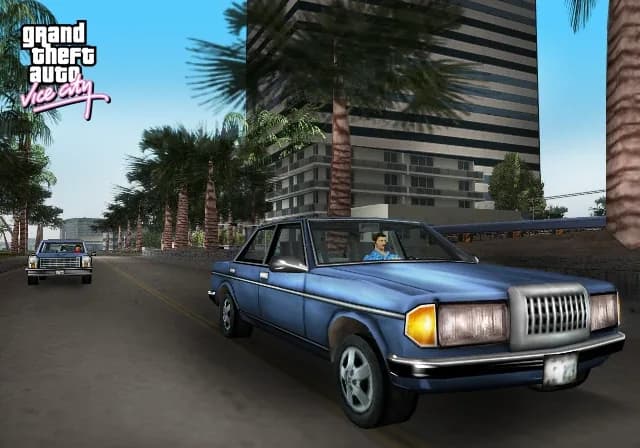
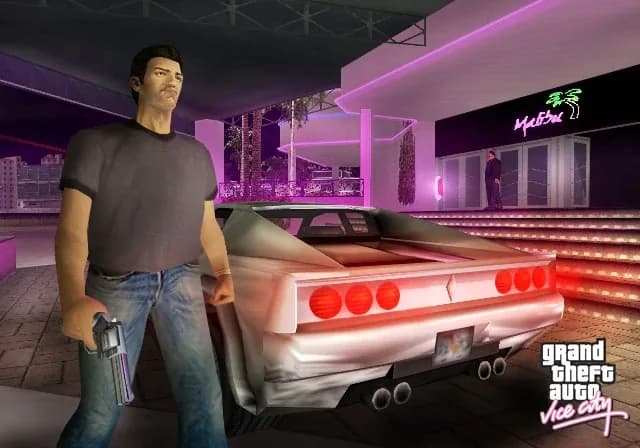
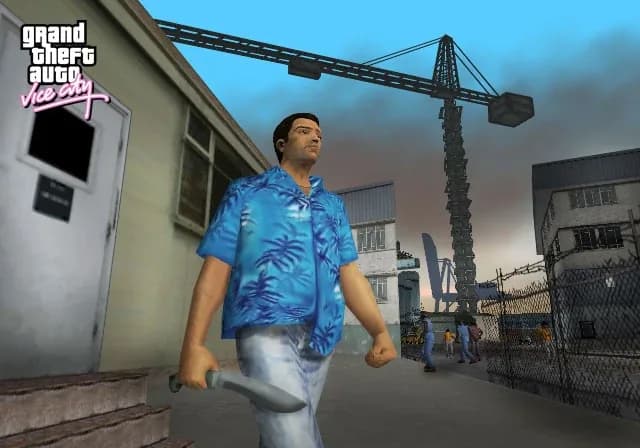
Tommy Vercetti is the first voiced protagonist in mainline Grand Theft Auto — voiced by Ray Liotta in his only video-game lead role. The character anchored Vice City's 2002 release, set the template for every GTA protagonist since, and remained the series's highest-profile celebrity-voiced character until Samuel L. Jackson took on Tenpenny in San Andreas.
Below: Tommy's backstory, his Vice City arc, and why the character still matters.
Backstory: the Liberty City years
Tommy Vercetti was a made man for the Forelli crime family in Liberty City during the early 1980s. The character is positioned as a serious enforcer — until a 1971 assassination job (the so-called "Harwood incident") goes wrong. Tommy kills 11 people in self-defense after walking into an ambush, earns the nickname "The Harwood Butcher," and is sentenced to 15 years in prison by Sonny Forelli for the violence.
Tommy serves the full 15 years in Liberty City State Penitentiary. The Vice City story opens shortly after his release — Sonny sends him to Vice City to run a drug deal, ostensibly as a "fresh start" but actually to keep him out of Liberty City's politics.
The Vice City arc
Tommy's Vice City arc is essentially Tommy rebuilding an empire from nothing, then declaring independence from Sonny Forelli. The three acts:
- The opening drug deal goes wrong. Tommy and his crew are ambushed at the docks; the money and the cocaine are stolen. Tommy survives; his crew is killed.
- Building the empire. Tommy works for a sequence of Vice City powers (Avery Carrington, Ricardo Diaz, the Cubans, Auntie Poulet's Haitians, Phil Cassidy) while quietly accumulating his own money, weapons, and influence. Mid-game, Tommy kills Diaz and takes over his operation including the Vercetti Estate mansion.
- The empire and the betrayal. Tommy buys properties across Vice City (an ice cream factory, a print works, a strip club, a taxi company, a film studio, the Malibu Club). Sonny Forelli arrives to collect the long-overdue debt; Tommy refuses; the final mission is the defense of the Vercetti Estate against the Forelli family.
The campaign closes with Tommy as the undisputed Vice City crime boss — a role the post-game free-roam preserves but doesn't develop further.
Ray Liotta's performance
Ray Liotta voiced Tommy across approximately 3,000 lines of dialogue in 2002. The performance is widely cited as one of the best video-game voice acting jobs of the era. Liotta brought:
- Goodfellas-era menace — the volatile, instantly-violent quality of his Henry Hill role
- Specific tonal range — Tommy is funny, frustrated, charming, terrified at different points; Liotta sells each
- Liberty City credibility — Liotta's New Jersey-Italian American voice fit the Forelli backstory perfectly
Liotta reportedly was paid relatively little for the role compared to his film work and was famously frustrated about it for years afterward (his interviews on the topic are widely circulated). Despite the dispute, Liotta did not return for any Vice City Stories or other Rockstar follow-up. Vice City remains his only Grand Theft Auto credit.
Liotta died in 2022 at age 67. The Vice City performance is one of the works most-cited in his obituaries.
What Tommy invented for the GTA protagonist template
Every GTA protagonist after Tommy owes him something:
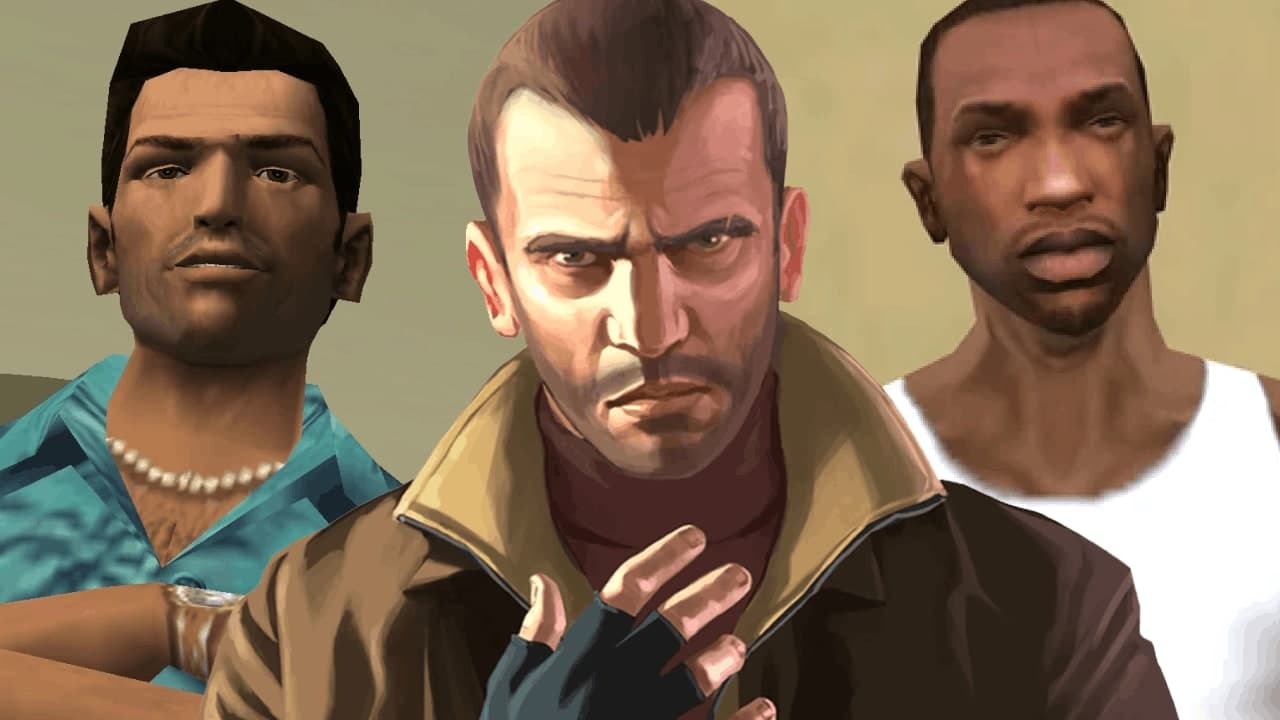
- CJ (San Andreas, 2004) — inherits the "empire building from nothing" arc structure
- Niko Bellic (IV, 2008) — inherits the East-Coast-immigrant-with-debts framing
- Trevor Philips (V, 2013) — inherits the explicit Scarface lineage and the comfort with violence
- Lucia Caminos (VI, 2026) — inherits the prison-yard intro Tommy's "released after 15 years" framing pioneered
The "voiced lead with a real internal life" template that Tommy established is the universal default in GTA now. Claude (silent, GTA III) is the historical anomaly; Tommy is the template.
The Liberty City Stories cameo
Vice City Stories (2006, set in 1984) and Liberty City Stories (2005, set in 1998) reference Tommy without showing him. Notable: Liberty City Stories explicitly mentions "the Harwood incident" and Tommy's prison sentence as backstory, confirming the canonical timeline. Tommy doesn't return as a playable or speaking character in any other GTA.
Why Tommy still works
Tommy's Vice City arc remains one of the strongest single-protagonist campaigns in the series. The reasons:
- Tight pacing. Vice City is half the size of San Andreas and half as long; Tommy's arc completes without the bloat that plagues larger games.
- Specific voice. Liotta's performance is consistent across the entire campaign — a unified character, not a vehicle for whatever the writers want at any given moment.
- Clear empire-building structure. The "build a property portfolio, defend it from Sonny" arc is the cleanest GTA story structure of any 3D-era game.
For the broader Vice City story context, see Vice City's 1986 Meets GTA 6's Leonida and the Vice City game hub.