Tommy's Empire: Every Property Worth Buying in Vice City
Vice City introduced the buyable-property system that defined the modern GTA. Here's what each property does, how much it earns, and the order to acquire them in.
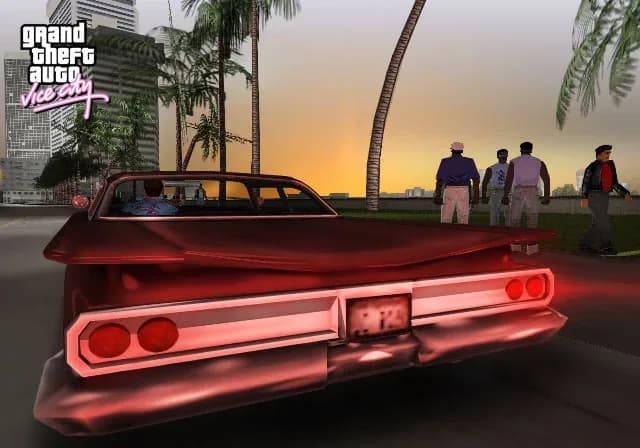
Vice City introduced buyable properties with passive income — the system that becomes asset properties in San Andreas, businesses in GTA V, and (per leaks) is reportedly extended further in GTA 6. For Tommy Vercetti, the property loop is the campaign: every major mid-game beat is acquiring or defending a new asset.
Below: the canonical list of every Vice City property, what each one earns, what it unlocks, and the optimal acquisition order.
How Vice City's property system works
Two property types:
- Safehouses — buyable purely for save points and garages. No revenue.
- Asset properties — buyable, revenue-generating buildings that also unlock missions. Each asset property has 3-6 missions; completing all asset missions across all properties unlocks the final asset bonus and several end-game items.
Asset properties pay daily revenue that caps and must be collected manually. The system requires you to revisit each property — driving back to your $5,000-a-day stripclub becomes part of the gameplay loop.
The story-acquired properties
These come automatically as you progress.
Vercetti Estate (Starfish Island)
Acquired mid-game in "Rub Out" — the mission where Tommy kills Ricardo Diaz and takes over his Starfish Island mansion. The Vercetti Estate becomes Tommy's primary safehouse, has a multi-car garage, and serves as the meeting point for every late-game mission.
Ocean View Hotel (Ocean Beach)
Tommy's starting safehouse. Free; story-given. Single save slot, no garage. Useful only for the first act.
The asset properties (in optimal acquisition order)
1. Pole Position Club (Washington Beach) — $30,000
A strip club on Washington Beach. Revenue: $4,000/day. Asset missions: a single mission unlocks the property. Quick win, low cost. Buy this first when you have $30K.
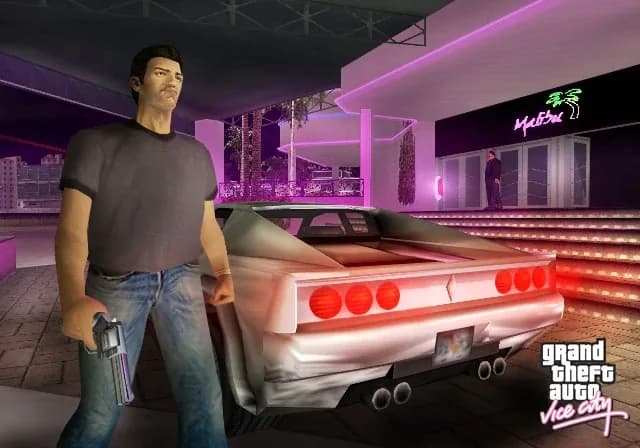
2. The Malibu Club (Vice Point) — $120,000
Required for the bank job mission "The Job" which is the climax of the second act. Revenue: $10,000/day after mission completion. The Malibu Club has 4 asset missions including the bank job sequence.
3. Sunshine Autos (Little Haiti) — $50,000
The highest-revenue asset property. Revenue: $8,000/day base, plus you can deliver vehicles to a delivery list to multiply earnings significantly. Asset missions: street-race series. Sunshine Autos's car list pays $1M+ if you complete it methodically.
4. Print Works (Downtown) — $70,000
Counterfeit money operation. Revenue: $8,000/day. Asset missions: 3 missions covering the counterfeit-cash operation. Lower-revenue per-day than Malibu but unlocks earlier in the third act.
5. Cherry Popper Ice Cream Factory (Little Havana) — $20,000
The cheapest asset property. Revenue: $4,000/day. Asset missions: the Distribution missions (selling drugs from the ice cream truck) — one of the cheesier asset-mission lines but pays solid cash.
6. Kaufman Cabs (Little Haiti) — $40,000
Taxi company. Revenue: $5,000/day. Asset missions: 4 missions covering the taxi operation, including the eventual cab takeover by Mercedes Cortez. Kaufman Cabs pays well per-day but the missions are repetitive.
7. Boatyard (Viceport) — $10,000
The cheapest asset property in absolute terms. Revenue: $1,500/day. Asset missions: 2 missions involving boat smuggling. Buy if you're going for 100% completion; skip if you're optimising.
8. InterGlobal Films Studio (Downtown) — $60,000
Film studio. Revenue: $7,000/day. Asset missions: 5 missions covering the porn-film operation — easily the funniest asset arc in the game, with a Steve Scott (the porn director) characterisation that's canonical Vice City comedy.
Optimal acquisition order
If you're optimising for cash flow during the campaign:
- Pole Position ($30K — quick first asset)
- Cherry Popper ($20K — cheap second asset)
- Sunshine Autos ($50K — highest base income)
- Boatyard ($10K — cheap completion flag)
- Print Works ($70K — third-act unlock)
- Kaufman Cabs ($40K — third-act)
- InterGlobal Films ($60K — third-act, fun missions)
- Malibu Club ($120K — bank-job-required, also third-act)
Total cost: $400K. By the time you're past the second act, the asset revenue alone funds the remaining purchases.
Why the property system matters
Vice City's properties are the foundation of every GTA business mechanic since. The "buy a property → run missions to unlock it → collect daily revenue → revisit periodically" loop is identical in San Andreas (Wang Cars, Verdant Meadows), in GTA V's businesses, and in GTA Online's nightclubs / arcades / agencies. Even GTA 6's confirmed Brian Heder Boat Works appears to follow the same pattern.
Vice City was Rockstar discovering that economic-loop gameplay is sticky — buyable assets give players a reason to revisit map points after the story has moved them elsewhere. Every later GTA leans on this insight.
For the broader Tommy Vercetti arc, see Tommy Vercetti: Vice City's Ray Liotta Lead, Profiled.