GTA 6's Bonnie-and-Clyde Framing: What It Means for the Story
Every outlet called Lucia and Jason GTA 6's Bonnie and Clyde long before Rockstar did; in August 2026 its narrative chief finally used the phrase. Here is what the framing implies for the campaign: stakes, structure, and likely arc.

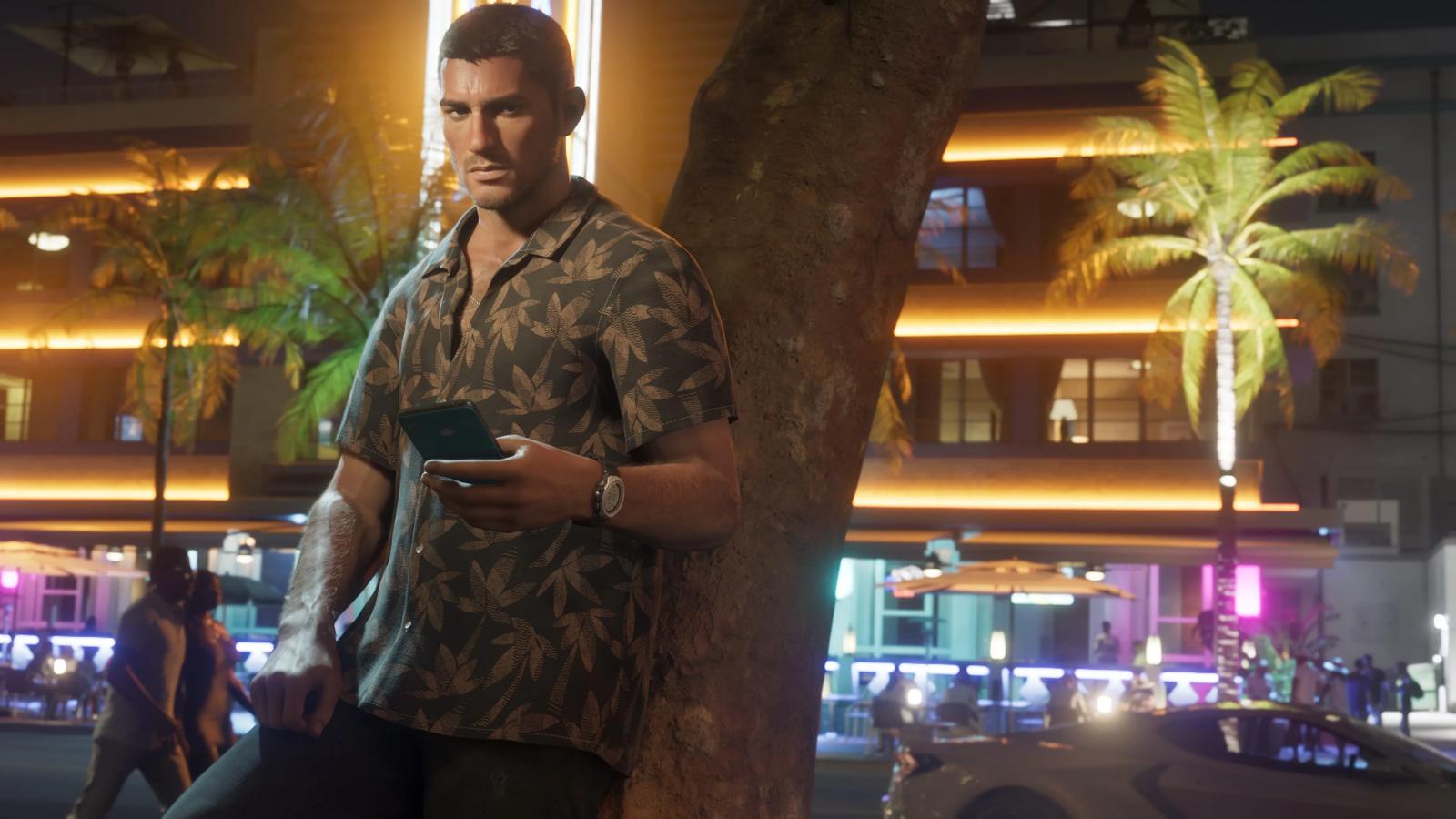
For two years the words "Bonnie and Clyde" came from the press, not from Rockstar (see what Rockstar had actually said). That changed with the Extended Look: in a Dazed interview published on August 27, 2026, Rockstar's senior vice president of narrative, Rupert Humphries, described GTA VI as "a Bonnie and Clyde-type narrative". The framing stuck because the material invites it: a couple on the run in the first promotional still, Trailer 2's closing montage, and an Extended Look that lets you "play as a couple, or go off and cause chaos independently". It's a structural choice with real implications for the campaign — a meaningful tonal shift from any previous GTA.
Below: what the framing means, what it implies for the story, and how to read the campaign through this lens.
What Bonnie-and-Clyde establishes
The cultural template is well-known:
- Two romantically-entangled criminals
- On the run together
- Robbing banks / shops as a duo
- Doomed love story — both die at the end (in the original 1934 historical reality and the 1967 film)
- Folk-hero ambiguity — celebrated by some, vilified by others
A campaign built on the Bonnie-and-Clyde template inherits all of these elements as its tonal foundation.
Implication 1: Romantic stakes
The two protagonists are partners, not adversaries. This rules out:
- A betrayal arc between Lucia and Jason (unlikely)
- A killable-protagonist ending (they live or die together)
- Independent character arcs that don't intersect (every major beat involves both)
It implies:
- Permanent shared apartments / safehouses — they live together
- Coordinated heist sequences — both characters at every job
- Romantic dialog — actual relationship content
- Stakes amplified by mutual danger — capturing one threatens both
Implication 2: Crime-as-running, not empire-building
Tommy Vercetti and Carl Johnson built crime empires from nothing. Lucia and Jason are explicitly on the run at the start of the campaign. This is a structural inversion:
- No accumulation arc — they're not building wealth they didn't have
- Survival framing — every job is to fund the next escape
- No long-term plans — Bonnie and Clyde never planned for retirement; they planned for the next county line
GTA 6's campaign probably doesn't have an "empire complete" arc. The stakes stay survival-level.
Implication 3: The doomed-love framing
The historical Bonnie-and-Clyde and the 1967 film both end with both protagonists dead. If the framing holds, it creates dramatic possibility:
- A protagonist dies at the end — possibly canonical, possibly a player choice
- The two endings exist — option A, B, or "both survive" (Option C-style branching as in V)
- The campaign has a tragic resolution — even if both survive
The 1967 film's ending is the most-cited cultural touchstone for this kind of story. Expect a campaign ending that leans into the romantic-tragedy template rather than a triumphant one.
Implication 4: Folk-hero ambiguity
Bonnie and Clyde were vilified by law enforcement but celebrated as folk heroes by Depression-era working-class Americans. The same ambiguity is implied for Lucia and Jason:
- Police pursuit as antagonist — the law-enforcement opposition is constant
- Public sympathy as ambient detail — bystander reactions, social-media-driven storyline beats (the social-feed-recording mechanic), public folklore
- A media subplot — likely involving the duo becoming media figures within the world
The social-feed-recording mechanic Trailer 2 introduced is the modern-day version of the 1934 newspaper headlines that elevated Bonnie and Clyde to folk-hero status. Rockstar has built a contemporary version of the cultural-celebrity-gangster trope, whether or not it ever says the names out loud.
Implication 5: The Tommy / Lucia parallel
There's a specific parallel between Tommy Vercetti's introduction and Lucia's:
- Tommy introduced as recently-released-from-prison
- Lucia introduced as currently-incarcerated
Tommy's "released after 15 years for the Harwood incident" framing is the most-direct ancestor of Lucia's "currently in prison, recently introduced to Jason" framing. The Vercetti template is being explicitly extended.
What this means for replay value
GTA 6's Bonnie-and-Clyde framing supports campaign replays in a way previous GTAs didn't:
- The romantic dialog rewards replay attention (the moments between heists)
- The relationship arcs intersect with player-driven decisions
- The ending choices (if any) become emotionally weighted
- The city's response to the duo's notoriety creates ambient world-changing content
What's NOT implied
The framing doesn't imply:
- Lucia and Jason are necessarily likeable — Bonnie and Clyde weren't morally pure
- The campaign is necessarily uplifting — many tragedies are central to the romantic-criminal canon
- Every mission is a robbery — diversification of mission types still expected
Cultural references Rockstar is drawing from
Beyond the literal Bonnie and Clyde:
- The 1967 Arthur Penn film Bonnie and Clyde (Warren Beatty, Faye Dunaway)
- Natural Born Killers (1994) — the cultural-celebrity gangster framing
- True Romance (1993) — romantic criminals on the run
- Thelma & Louise (1991) — feminist criminal road movie
The combined cultural reference frame is the 1990s-2000s cinematic crime tradition — specifically the romanticised criminal duo.
For the broader Lucia and Jason context, see Lucia and Jason: The First Dual Protagonists Since GTA V. For the larger character ecosystem, see GTA 6's Confirmed Characters Encyclopedia.
Update log
- September 12, 2026: corrected the sourcing. The Bonnie-and-Clyde comparison began in press coverage, not in Rockstar's trailers or Newswire posts as the original text claimed; Rockstar's narrative chief Rupert Humphries first used the phrase on the record in a Dazed interview for the Extended Look (August 27, 2026). Removed the claim that Trailer 1, Trailer 2 and the Newswire "all invoke the comparison".