Vice City's 1986 Map: A District-by-District Tour
From Ocean Beach to Starfish Island to the Malibu Club — every district of Vice City's 1986 map, what it's modelled on, and what to do in each.
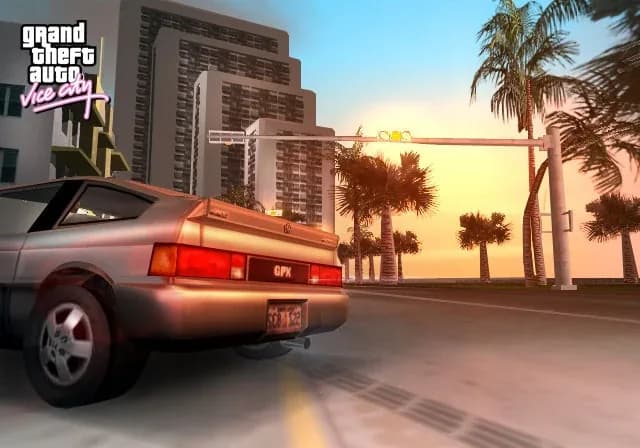
Grand Theft Auto: Vice City (2002) is set in 1986, a fictional Miami filtered through Miami Vice and Scarface. The map is split into two main islands: Vice City Beach (the eastern barrier island, modelled on Miami Beach) and Vice City Mainland (the western mainland, modelled on the actual city of Miami). Below: the district-by-district tour.
Vice City Beach — the eastern island
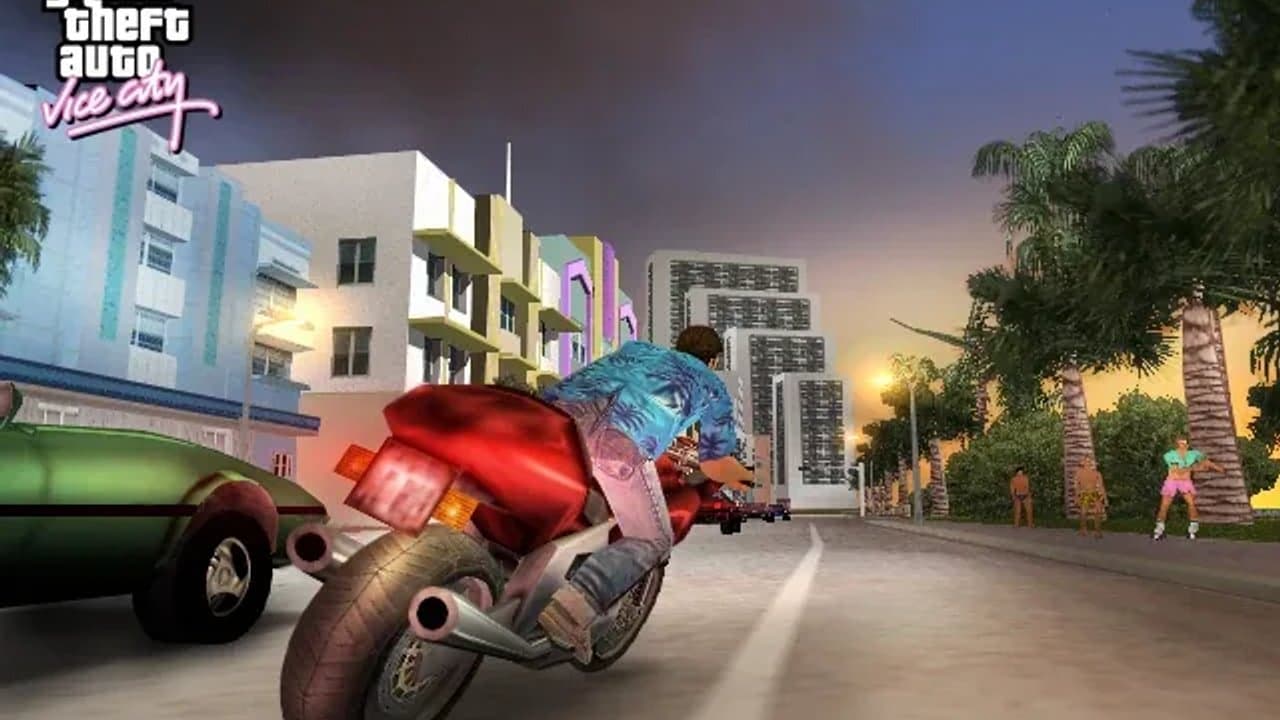
The neon strip. Where the campaign opens, where most of the iconic visual identity lives, and where Tommy spends the early acts.
Ocean Beach
The southernmost beach district. Modelled on South Beach Miami. The Ocean View Hotel (Tommy's first safehouse) is here, plus the art-deco strip of pastel buildings that defines Vice City's look. The Pier 1 amusement park sits at the south tip.
Washington Beach
North of Ocean Beach. The Malibu Club is here — the after-dark hub of the second act, owned by Tommy after the Bank job. Plus several first-act mission locations.
Vice Point
The wealthier northern beach district. The mall (Vice Point Mall) is the centerpiece — multi-story, navigable, with several mission interiors. Vice Point also contains the North Point Mall parking lot for the heist getaway.
Starfish Island
A standalone luxury island between the two main islands, connected by causeways. The Vercetti Estate (Diaz's mansion before Tommy takes it over) is here. Walled, gated, only one main entrance — strategically the most defensible location on the map. Modelled on Star Island (the real-world Miami Beach luxury enclave).
Vice City Mainland — the western island
The working city. Less neon, more grit. This is where the second-act expansion-of-the-empire arc plays out.
Little Havana
Home of the Cuban gang, run by Umberto Robina. Modelled on Miami's actual Little Havana neighborhood. Tommy works for the Cubans in several second-act missions.
Little Haiti
Home of the Haitian gang, run by Auntie Poulet. The Haitian-Cuban gang war is one of Vice City's defining mid-game subplots — Tommy plays both sides in alternating missions.
Downtown
The financial district, with several skyscrapers including the InterGlobal Films studio in the southwest corner. Bank job mission unfolds here in the third act.
Little Cuba
A smaller adjunct to Little Havana, with the Cherry Popper ice cream factory (the Vercetti-owned property after the second act).
Viceport
The shipping district at the southwest. Boat Yard property (purchasable mid-game). The opening drug deal that sets off the campaign happens at Viceport's docks.
The Mendez Family Estate
Not a public district — the back-end residential / industrial zone in the northwest. Mostly used for property purchases and mid-game contract missions.
Properties Tommy can buy
Vice City introduced buyable properties with passive income — the system later extended into San Andreas's asset properties and GTA V's businesses. Tommy's purchases:
- Pole Position Club (strip club, Washington Beach)
- Cherry Popper Ice Cream Factory (Little Havana)
- Sunshine Autos (car dealership, Little Haiti — biggest single asset, generates most cash)
- Print Works (Downtown — counterfeit money operation)
- Kaufman Cabs (taxi company, Little Haiti)
- Boatyard (Viceport)
- InterGlobal Films (Downtown studio)
- The Malibu Club (nightclub, Washington Beach — required for the bank job)
- The Vercetti Estate (Starfish Island — story-acquired, not bought)
We covered the property mechanics in Vice City's Property Empire Guide.
What's hidden
A handful of map details that aren't on the main route:
- Phil Cassidy's Trailer Park in the northwest — Phil sells weapons and is a recurring 3D-Universe character
- The Junkyard — a salvage yard with vehicle spawns
- Fort Baxter Air Base — heavily-armed military base; provoking the army here gives Tommy a six-star wanted level instantly
- Several rooftops that contain hidden packages (collectibles)
How the map shaped the series
Vice City's two-island structure is a scale-down of GTA III's three-island Liberty City. The campaign-locked geography — the bridge to Vice City Mainland opens partway through the story — is identical in concept to GTA III. The buyable properties mechanic introduced here became the asset-property template for San Andreas and GTA V.
Vice City's map is also the closest visual ancestor to GTA 6's Vice City. The 2026 HD-universe Vice City sits in the same coastal-barrier-island geography, with the art-deco strip preserved as a callback. We covered the comparison in Vice City's Then and Now.
For the interactive map, see the Vice City map.